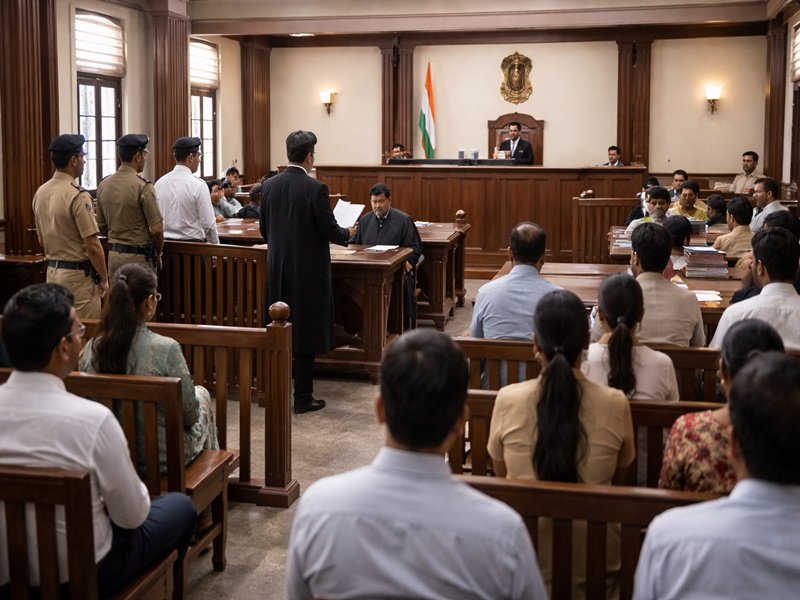

New Delhi, Feb 18 (LatestNewsX) The Delhi High Court has dismissed a revision petition filed by a woman advocate challenging the discharge of her former partner and two others in a case alleging rape, deceitful marriage, wrongful confinement, and criminal intimidation.
Holding that the material on record reflected a long‑standing consensual relationship rather than sexual exploitation, a single‑judge bench of Justice Swarana Kanta Sharma upheld the Sessions Court’s order discharging Irshad Ali Khan @ Guddu Chaudhary of offences under Sections 376(2)(n), 377, 341, 342, 493, 495, 201, 354D, and 506 of the IPC, as well as charges under Section 506/34 IPC against two co‑accused.
Justice Sharma clarified that the trial will proceed only for offences under Sections 323 and 325 IPC relating to alleged physical assault.
An FIR was registered at Jyoti Nagar police station on September 8, 2022, following a complaint by the prosecutrix alleging that she had been sexually exploited for years on the basis of deceit, blackmail through alleged obscene photographs, and coercion into marriage.
In its order, the Delhi High Court recorded that the relationship between the parties commenced in 2011 and continued for nearly eleven years. During this period, the prosecutrix pursued her LL.B., enrolled as an advocate, and practised law while residing with the accused. Also, a Nikahnama dated December 14, 2012, relied upon by the accused, was verified by the Investigating Officer on the Sessions Court’s directions.
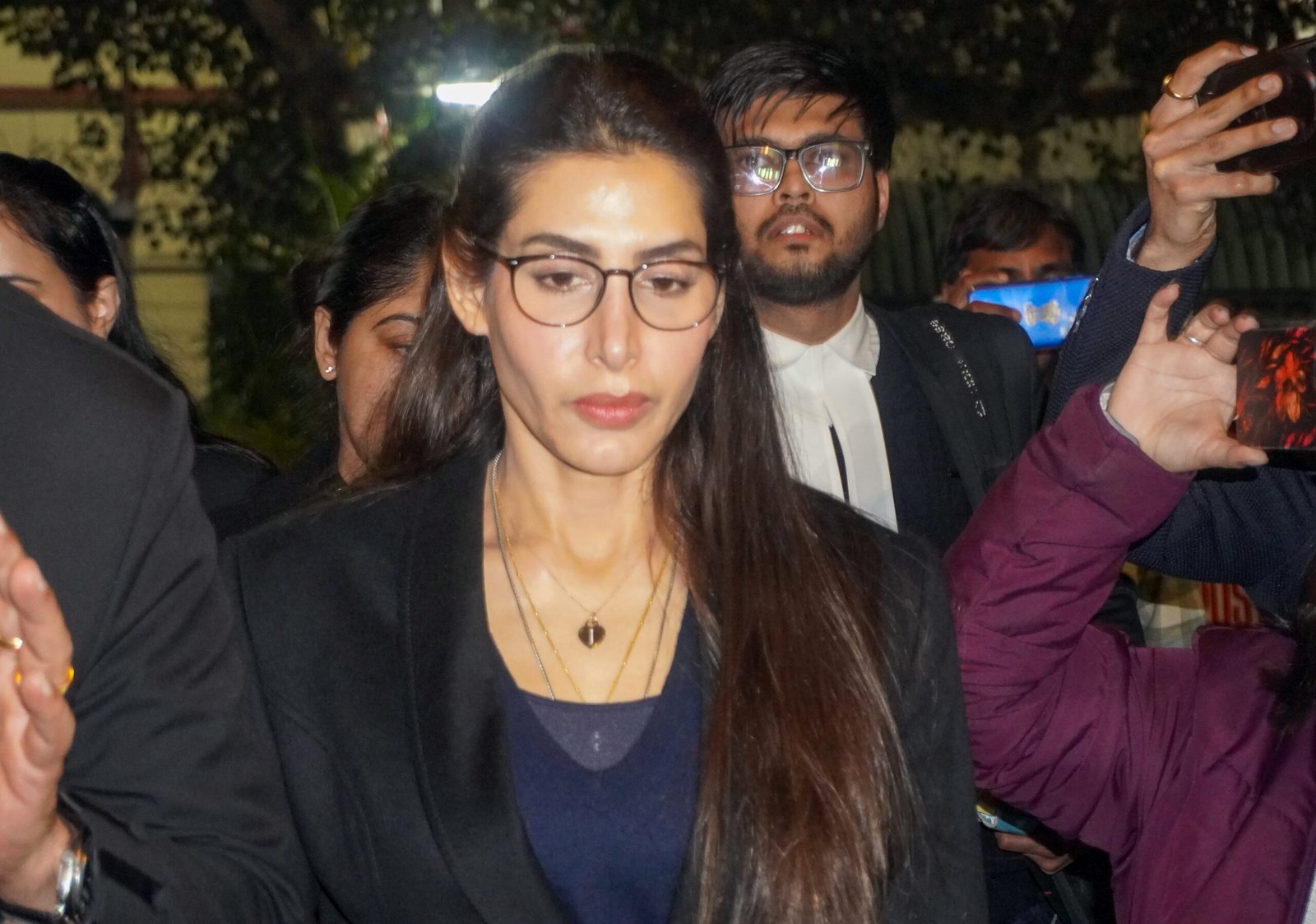


The Qazi confirmed solemnisation of the Nikah with the free consent of both parties. Independent witnesses from the neighbourhood stated that the prosecutrix had resided with the accused since 2012 and was known as his wife.
The Delhi HC noted that official documents such as the prosecutrix’s Aadhaar card issued in 2013 and voter identity card issued in 2017 recorded her address as “c/o Irshad Ali Khan” and mentioned his name as her husband.
Justice Sharma observed that while delay in reporting sexual offences is not by itself fatal, the “inordinate and unexplained delay of nearly eleven years” in lodging the FIR, coupled with the surrounding circumstances, was a relevant factor at the stage of charge.
“In these circumstances, the learned Sessions Court cannot be faulted for holding that the material on record is insufficient, even at a prima facie stage, to frame charges under Sections 376(2)(n) or 377 IPC,” the judgment stated.
Rejecting allegations of deceitful marriage, the Delhi High Court held that the material on record indicated knowledge and voluntary participation on the part of the prosecutrix.
“In view of the aforesaid material, it cannot be said that respondent no. 2 (accused) practised any deceit or concealed material facts relating to his religion or marital status so as to induce the prosecutrix into believing that she was his lawfully wedded wife,” it said.
The Delhi High Court also found no specific material to support charges of wrongful restraint or confinement under Sections 341 and 342 IPC, and that the mere presence of the co-accused near the prosecutrix’s residence did not satisfy the essential ingredients of criminal intimidation under Section 506 IPC.
However, Justice Sharma found prima facie material for offences under Sections 323 and 325 IPC, observing that the medical examination conducted soon after registration of the FIR recorded a fracture in the prosecutrix’s hand, opined to be grievous in nature.
“The existence of such injury, as reflected in contemporaneous medical evidence, provides prima facie corroboration to the allegation of physical assault,” the judgment held.
In significant concluding observations, Justice Sharma cautioned against converting failed relationships into criminal prosecutions, observing that “criminal law, particularly in cases arising out of intimate relationships, must be applied with circumspection”.
“Consent, when freely given with full awareness of material facts and sustained over a considerable period, cannot be retrospectively withdrawn so as to convert a consensual relationship into a criminal offence merely because the relationship has broken down,” the Delhi High Court said.
“Criminal law cannot be permitted to become an instrument of retaliation, pressure, or personal vendetta arising out of a relationship that has irretrievably broken down. Its object is not to penalise disappointment or failed expectations, but to punish conduct that is inherently criminal,” it added.
Dismissing the revision petition, the Delhi High Court held that it found “no infirmity or illegality” in the Sessions Court’s order and clarified that its observations would not influence the trial on the remaining charges.
pds/vd
Stay informed on all the latest news, real-time breaking news updates, and follow all the important headlines in world News on Latest NewsX. Follow us on social media Facebook, Twitter(X), Gettr and subscribe our Youtube Channel.