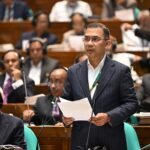


In New Delhi on December 7, the nation was remembering the legacy of Bharat Ratna Dr B.R. Ambedkar on Mahaparinirvan Diwas, the day that marks his passing, when a surprising event took place in Murshidabad, West Bengal. A suspended member of the Trinamool Congress, Humayun Kabir, chose that very day to place a cornerstone for what he called the “Babri Mosque.”
Kabir insisted that he was simply exercising his “constitutional right” and that nothing about his action broke any law. He even hinted that the state government gave him its blessing. According to him, anyone can erect a temple, church or mosque anywhere in the country, but what matters is the intent, the surrounding context, and especially the timing.
He cited the Supreme Court’s 2019 verdict on the Ayodhya dispute, arguing that it “acknowledged the demolition of the Babri Masjid” and therefore did not prohibit building another mosque elsewhere. Yet the move was less about spiritual restoration and more about a calculated political provocation.
The 2019 judgment – which settled the long‑standing conflict over the 2.77‑acre Ayodhya site – was accepted nationwide because it came after thorough judicial review. The court recognized a historic wrong and offered a clear path toward closure, and a Ram Temple was thereafter constructed there.
For the rest of the country, the issue largely shifted from agitation to quiet acceptance. Over the last six years, despite various political pushes, December 6 had lost much of its inflammatory power and ceased to dominate the headlines. The nation had, in its own way, let a painful chapter recede into history. Kabir’s sudden resurfacing of the Babri narrative is linked to the upcoming assembly elections in West Bengal.
Supported subtly by his party and the state machinery, Kabir rallied crowds, turning a foundation‑laying ceremony into a deliberate political spectacle. In the event, thousands of Muslims carried red bricks on their heads in a staged display of defiance, thrusting December 6 back into a polarizing vortex.
Every year, December 6 forces India to confront two contrasting histories: the 1992 demolition of the Babri Masjid on one side and the 1956 passing of Ambedkar on the other. Ambedkar, who built India’s moral and intellectual foundation, belongs to everyone in the country. In contrast, the Babri episode is one of the most divisive moments in Indian history.
When a political actor chooses Babri over Ambedkar on that day, the message is clear: division outweighs unity, provocation supersedes constitutional principles. Is it merely politics dressed as religious assertion? Kabir’s motives are obvious. Religion, after all, remains one of the most reliable tools to stir emotions and mobilize voters for political ends. The state elections in West Bengal are crucial for both Trinamool’s Mamata Banerjee and the BJP, which seeks a broader base in the state.
The regret lies not simply in Kabir invoking Babri, but in his decision to do so on a day that ought to remind India of Ambedkar’s ideals—justice, equality, liberty and fraternity. By reviving a symbol of communal fracture, he forces the country to confront a choice: Ambedkar or Babri. The Babri dispute—its aftereffects were resolved through commissions, courts, and eventual closure—does not ignite passions like Ambedkar’s teachings, which warned repeatedly against majoritarianism, communalism and identity politics. Kabir’s actions betray that warning.
His political theatrics pull India toward its worst impulses, rekindling a divisive symbol at the expense of a statesman who fought for national unity. India, though a young democracy, is part of an ancient civilisation. Its task is to choose stability over sentiment, foresight over frenzy. If December 6 becomes merely a day of communal flashback, the nation misses an opportunity for reflection. If it reverts to honouring Ambedkar’s vision, it gains guidance and dignity. That is why Kabir’s stunt deserves to be called out as a deliberate attempt to drag the state back into artificial conflict. Who benefits from stoking an old wound right before elections? The Trinamool Congress cannot absolve itself from this.
Although Kabir is suspended on paper, the scale of mobilisation, the machinery behind the event, and the atmosphere it created suggest otherwise. If the party truly disapproved, how did such a large gathering happen? Why was a day dedicated to Ambedkar hijacked for a polarising spectacle? These questions belong not only to Kabir but also to Mamata Banerjee and her administration. If they claim to champion constitutional values, then why endorse an act that undermines the ideals Ambedkar fought for?
Stay informed on all the latest news, real-time breaking news updates, and follow all the important headlines in world News on Latest NewsX. Follow us on social media Facebook, Twitter(X), Gettr and subscribe our Youtube Channel.