

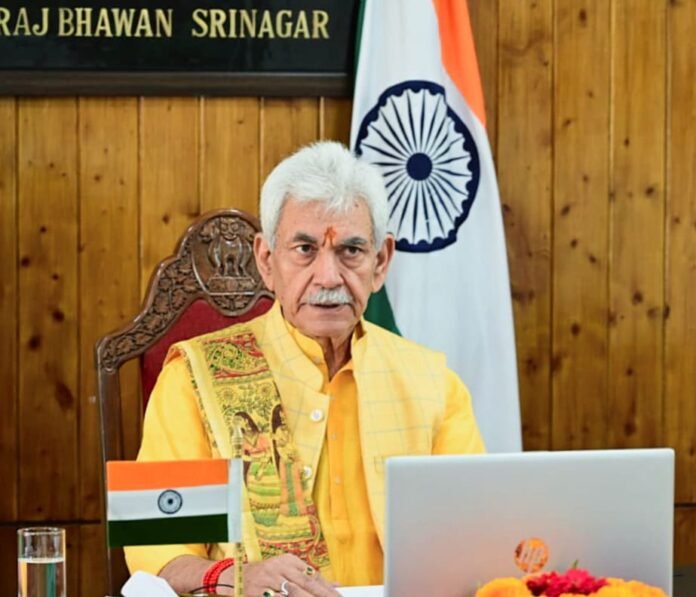
Jammu, 17 Oct – Manoj Sinha, the Lieutenant Governor of Jammu and Kashmir, flew to Russia today with a special mission. He leads a delegation to Kalmykia, the Russian republic that hosted a week‑long exhibition on the relics of Lord Buddha. The goal is to bring the relics back to India and place them in the Geden Sheddup Choikorling Monastery in Elista, the “Golden Abode of Shakyamuni Buddha.”
The exhibition is run by the Ministry of Culture alongside the International Buddhist Confederation, the National Museum and the Indira Gandhi National Centre for the Arts. In a post on X, the Lt‑Gov’s office thanked Prime Minister Narendra Modi for the opportunity and wished a religious blessing: “Om Namo Buddhaya.”
India holds a large Buddhist community – about 8.4 million people, or 0.7 percent of the total population, according to the 2011 census. Although Buddhism began in India, it is now a minority religion. Most Indian Buddhists live in Maharashtra, with sizeable groups in Arunachal Pradesh, Mizoram, Sikkim and West Bengal. Among them, about 87 percent follow Navayana Buddhism, mainly in Maharashtra.
The delegation’s arrival will have a ripple effect on tourism in Jammu and Kashmir. The region is home to historic Buddhist sites such as the ruins at Harwan and Ushkur, the ancient Jayendra Vihara, and the archaeological complex at Ambaran near Akhnoor. These sites underline Kashmir’s role in the spread of Buddhism and its long‑standing links to scholars from across Asia.
Harwan, located near Srinagar, was the venue of the 4th Buddhist Council under Kushan king Kanishka. Its ancient ruins, tiles and carvings still point to a vibrant Buddhist past. Nearby, Ushkur yielded a terracotta head of Buddha during excavations and is linked to the ancient town of Huskapura.
Jayendra Vihara, another landmark close to Baramulla, was a renowned university for Buddhist learning. The famed Chinese pilgrim Hiuen Tsang studied there for two years in the 7th century. Further south, Ambaran near Akhnoor, a monastic complex that was active from the 2nd century BCE to the 7th century CE, provides a window into the region’s cultural evolution.
Outside Srinagar city, the monastery of Parihaspur, built by King Lalitaditya, was famous for a colossal Buddha statue. These sites, together with the current cultural exchange, highlight the deep Buddhist heritage that stretches across the Kashmir plain.
The return of the Buddha relics will not only strengthen cultural ties between India and Russia but also draw attention to India’s ancient religious traditions and the rich Buddhist history of Jammu and Kashmir.
Source: ianslive
Stay informed on all the latest news, real-time breaking news updates, and follow all the important headlines in world News on Latest NewsX. Follow us on social media Facebook, Twitter(X), Gettr and subscribe our Youtube Channel.