

New Delhi, Dec 12 – In a notable move, the government on Friday approved a fully digital, two‑phase Census for 2027, earmarking Rs 11,718 crore for the project. Officials say that moving the entire count online will make the process faster and give the data a higher level of accuracy.
The census was originally scheduled for 2021 but was delayed largely due to the COVID‑19 pandemic and its lingering effects. Leaders pointed out that many countries that tried to enumerate their populations immediately after lockdowns ran into issues of data quality and coverage gaps. They also noted that disruptions in logistics and staffing had made a postponement necessary.
India’s decennial census is the country’s key demographic exercise. It requires meticulous planning, allocation of resources, and a legal framework for delimiting constituencies that in turn shapes the electoral rolls.
India’s last full census in 2011 recorded a population of 1.21 billion, along with insights into urbanisation, literacy rates and a gradually improving sex ratio. These snapshots drive policy decisions for the next ten years and guide ministries, states and researchers as they design welfare schemes and plan infrastructure projects.
Population figures also feed the constitutional process of delimitation. By drawing new constituency boundaries that roughly equalise representation, the census provides the demographic backdrop for electoral rolls and the sample populations used in various surveys.
The delay in census-taking, coupled with the decision to collect caste data, has sparked both technical and political debate. In southern states, there is worry that a new census could trigger seat redistribution that would erode their relative representation, given slower population growth there compared to the north. The centre has reassured that these concerns will be addressed when the time comes.
The plan to collect caste information also adds political sensitivity. Some fear how the data could influence reservations and electoral calculations. With a projected rise in population, there might be more lawmakers, so Parliament had to design its new building to accommodate them comfortably.
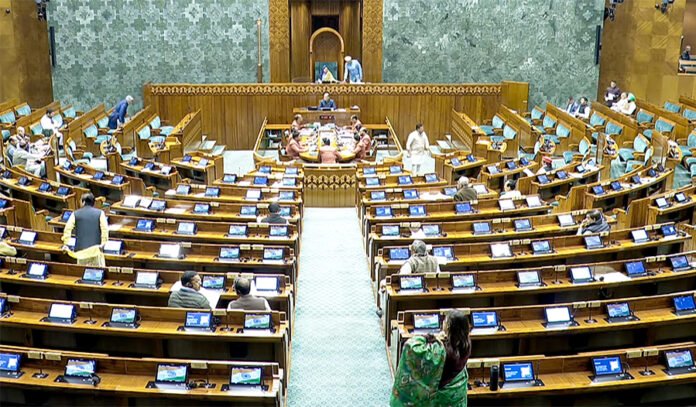
Accordingly, the government built a new Parliament complex that can seat up to 888 members in the Lok Sabha and 384 in the Rajya Sabha. The exact number of representatives will only be determined after the 2027 Census and the subsequent delimitation process. Until then, the new capacity simply removes a physical limitation that previously constrained the size of each house.
The new complex was conceived not just as a modern workplace, but to future‑proof India’s legislature for a larger membership and for more complex committee duties. Experts noted that the old circular chamber was too cramped for a growing democracy, lacking space for expanded membership, modern technology, and committee rooms. The practical solution was a larger, triangular complex that can handle more simultaneous legislative activity.
Ultimately, while the new Parliament building resolves a practical bottleneck, any increase in seats will still require political agreement and legal action after the Census and delimitation. Parliament would need to pass enabling legislation or a constitutional amendment to adjust the total number of seats, after which the Delimitation Commission would redraw boundaries and allocate seats among states using the updated population data.
— LatestNewsX
jb/uk
Stay informed on all the latest news, real-time breaking news updates, and follow all the important headlines in world News on Latest NewsX. Follow us on social media Facebook, Twitter(X), Gettr and subscribe our Youtube Channel.