

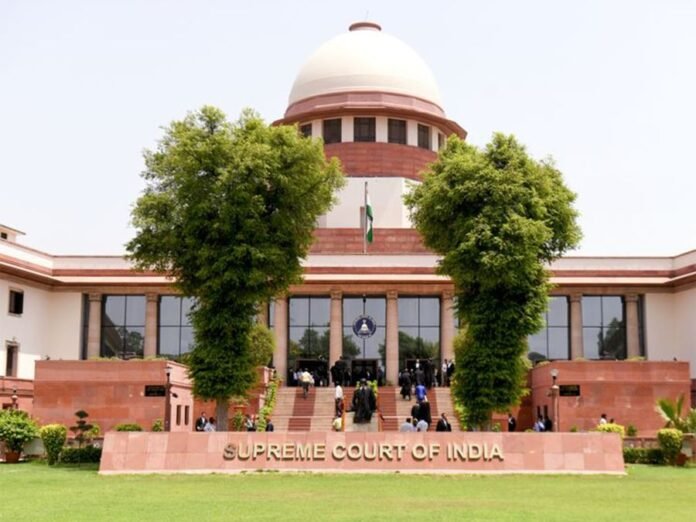
India’s Supreme Court pressed the central government on Wednesday about why death-row inmate Balwant Singh Rajoana remains unexecuted after his conviction in the 1995 assassination of Punjab Chief Minister Beant Singh. The court highlighted the long delay in his case, which has drawn attention amid ongoing debates over death penalty mercy petitions.
A bench led by Justices Vikram Nath, Sandeep Mehta, and NV Anjaria questioned Solicitor General KM Nataraj during the hearing. “Why didn’t you hang him till now? Who’s responsible for that? At least, we haven’t stayed the execution,” the justices remarked after the government called the offense serious.
Rajoana’s lawyer, senior advocate Mukul Rohatgi, pushed for commuting the death sentence to life imprisonment. He pointed to the mercy petition pending with President Droupadi Murmu since 2012. “This man has waited 15 years on death row, sometimes in solitary confinement. We don’t even know his mental state anymore,” Rohatgi told the court. He noted that the top court had previously urged timely decisions on such pleas.
The government responded that it would check the status and update the court soon. The bench scheduled the next hearing for October 15, making it clear the case won’t be delayed at the Centre’s request.
This isn’t the first time the Supreme Court has urged action on Rajoana’s mercy plea. Back in January, it gave the government until March 18 to decide, warning it would review the merits otherwise. The Centre called the case sensitive due to the high-profile killing of a sitting chief minister and asked for more time, citing national security concerns.
Rajoana, a supporter of the militant Babbar Khalsa group, played a role in the bomb blast that killed Beant Singh in Chandigarh on August 31, 1995. A Chandigarh court sentenced him to death in 2007, and the Punjab and Haryana High Court upheld it in 2010. He never appealed.
Over the years, Rajoana has served nearly 29 years in prison, including 17 on death row in a tiny 8×10 cell and 2.5 years in isolation. His team argues the extraordinary delay in the mercy process justifies commutation and possible release.
In 2019, the government agreed to commute his sentence to life for Guru Nanak’s 550th birth anniversary, but it hasn’t happened yet. Rajoana filed a fresh petition in 2020, and in May 2024, the Supreme Court refused immediate commutation but ordered a prompt decision by authorities.
His execution was set for March 31, 2012, but the then-government halted it days before after the Shiromani Gurdwara Parbandhak Committee (SGPC), a key Sikh body, submitted the mercy plea. The case continues to spotlight issues around death penalty delays and human rights in India.
Stay informed on all the latest news, real-time breaking news updates, and follow all the important headlines in world News on Latest NewsX. Follow us on social media Facebook, Twitter(X), Gettr and subscribe our Youtube Channel.


