
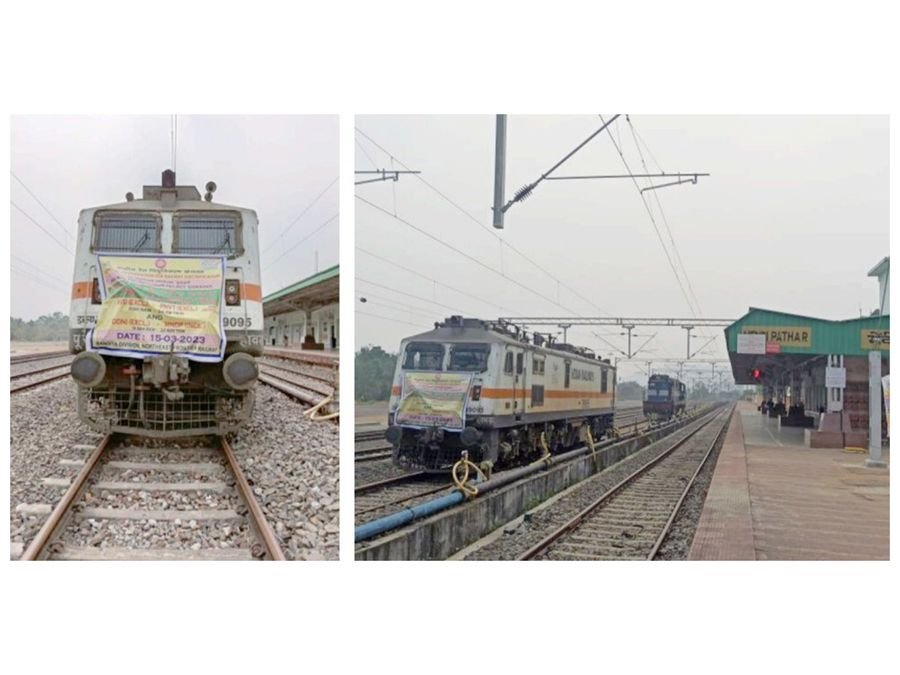
(source : ANI) ( Photo Credit : ani)
Northeast India’s Railway Boom: Connecting Hills, Valleys, and Capitals
Imagine weaving through misty hills and deep valleys on shiny new railway tracks—that’s the exciting change sweeping India’s Northeast. Once a tough, isolated region, it’s now buzzing with ambitious railway projects that promise better travel, booming business, and stronger ties across states. From Mizoram to Nagaland, these tracks aren’t just metal lines; they’re opening doors to a brighter future.
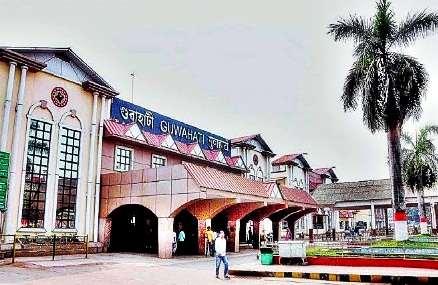
The Ministry of Railways shared some big updates: Over the last 10 years, the Northeast’s rail network has transformed like never before. Old dreams on paper are turning real, with fresh stations popping up in places that hadn’t seen trains for over a century. Capitals like Aizawl are finally linking up to the national grid, making travel from Guwahati to these remote spots quicker and easier.
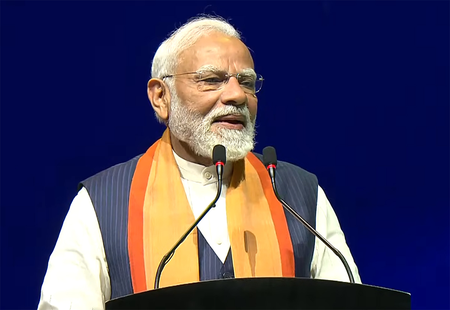
Take Mizoram’s 51 km Bairabi-Sairang railway line, for instance. Prime Minister Narendra Modi kicked it off recently, costing over ₹8,070 crore. This line puts Aizawl squarely on India’s railway map for the first time. To celebrate, three new trains rolled out: the Sairang-Delhi Rajdhani Express, Sairang-Guwahati Express, and Sairang-Kolkata Express. Mizoram’s rail story started back in the 1980s with Bairabi station near Assam, first as a metre-gauge spot. By 2016, it switched to broad gauge under the Kathakal-Bairabi project, welcoming its first freight train loaded with rice and a passenger service flagged off virtually by the PM. Looking ahead, the 223 km Sairang-Hbicchhuah project will stretch tracks to Mizoram’s southern border, paving the way for direct trade with Myanmar and Southeast Asia through Sittwe port.
Nagaland’s getting its share too. For over 100 years, Dimapur was the state’s only railhead. That changed in 2022 when Shokhuvi became the second station. The 82.5 km Dimapur-Kohima new line is moving fast—the Dhansiri-Shokhuvi part opened in 2021, and the Donyi Polo Express started running passengers in 2022. The Shokhuvi-Molvom section wrapped up in March 2025, and more sections like Molvom-Pherima (by October 2026) and Pherima-Zubza (by December 2029) will soon connect Kohima, the capital, to the rest of India.
In Tripura, rails have pushed right to the borders. The 152 km Badarpur-Agartala line switched to broad gauge in 2016, and the 112 km Agartala-Sabroom extension reached near Bangladesh between 2016 and 2019. The whole network is now electrified, with doubling work planned up to Agartala for smoother, faster rides.



Manipur’s on track too. Jiribam station near Assam went broad gauge in 2016. The 110 km Jiribam-Imphal line is building in phases: Jiribam-Vangaichungpao opened in 2017, followed by Vangaichungpao-Khongsang. Upcoming bits include Khongsang-Awangkhul by March 2026, Awangkhul-Noney by 2027, and Noney-Imphal by 2028, finally linking the capital Imphal.
Assam leads the charge as the region’s rail backbone. Between 2014 and 2017, 833 km of metre-gauge tracks flipped to broad gauge, including key stretches like Lumding-Silchar (210 km) and North Lakhimpur-Sripani (81 km). New lines like the Bogibeel bridge (73 km, 2018) and Tetelia-Kamalajari (10 km, 2018) are complete. Doubling projects, such as Lumding-Furkating (140 km, starting 2026) and Digaru-Hojai (102 km, done 2020-22), boost capacity. Electrification and new connections keep things humming.
Arunachal Pradesh shines with Naharlagun station near Itanagar, opened in 2014 under the Harmuti-Naharlagun project. The Balipara-Bhalukpong line went broad gauge in 2015 as part of the massive 505 km Rangiya-Murkongselek line. Ongoing work on Murkongselek-Pasighat includes Murkongselek-Sille (by October 2025) and Sille-Pasighat (by February 2026). Surveys are done for lines to Tawang, Pasighat-Parashuram Kund-Wakro, and Bame-Aalo-Mechuka, eyeing more growth.
Even Meghalaya and Sikkim are joining in. Mendipathar became Meghalaya’s first railway station in 2014 via the Dudhnoi-Mendipathar project, with 8.67 km of tracks in the state. Sikkim’s 44.96 km Sevok-Rangpo line aims to finish by December 2027, giving the state its debut rail link.
Since 2014, railway funding for the Northeast has jumped fivefold to ₹62,477 crore, with ₹10,440 crore for this year alone. Over ₹77,000 crore worth of projects are underway—the biggest rail push in the region’s history. This isn’t just about tracks; it’s changing lives, sparking trade, and knitting the Northeast closer to India. From isolated hills to bustling borders, these railways carry hope for jobs, tourism, and unity.
Stay informed on all the latest news, real-time breaking news updates, and follow all the important headlines in world News on Latest NewsX. Follow us on social media Facebook, Twitter(X), Gettr and subscribe our Youtube Channel.