

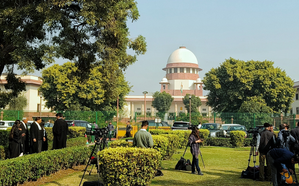
The Supreme Court of India has directed the central government to develop a clear policy to prevent foreign criminals from fleeing the country after being accused of crimes here. This important step comes as part of ongoing efforts to strengthen India’s legal process and ensure justice.
The issue made headlines when a Nigerian national, involved in a high-profile criminal case, allegedly escaped to Nigeria after being granted bail by the Jharkhand High Court in May 2022. The Supreme Court had previously canceled that bail in December, ordering authorities to bring the accused back to face trial in India.
During the latest hearing, the court emphasized the need for better rules to handle such situations. Justices Dipankar Datta and Augustine George Masih pointed out that cases like this keep happening and called for guidelines to prevent similar incidents in future.
The court was also told that extradition might be difficult because India and Nigeria do not have a bilateral extradition treaty. The Union Ministry of External Affairs confirmed that without such an agreement, Nigeria is unlikely to extradite its own citizen.
Because of this, the court decided that continuing to pursue the matter of extradition might not be effective. Instead, the court disposed of the petition filed by the Jharkhand government, which had challenged the bail cancellation.
However, the Supreme Court made it clear that the central government should consider creating policies or taking other actions to prevent foreign nationals accused of crimes in India from absconding. This move aims to improve justice delivery and prevent criminals from escaping after committing offenses here.
This development highlights the need for stronger legal measures and international cooperation to combat crime and ensure accountability.


