IND vs SA: 5 Major Reasons that India suffered a 0-2 humiliation vs SA at home

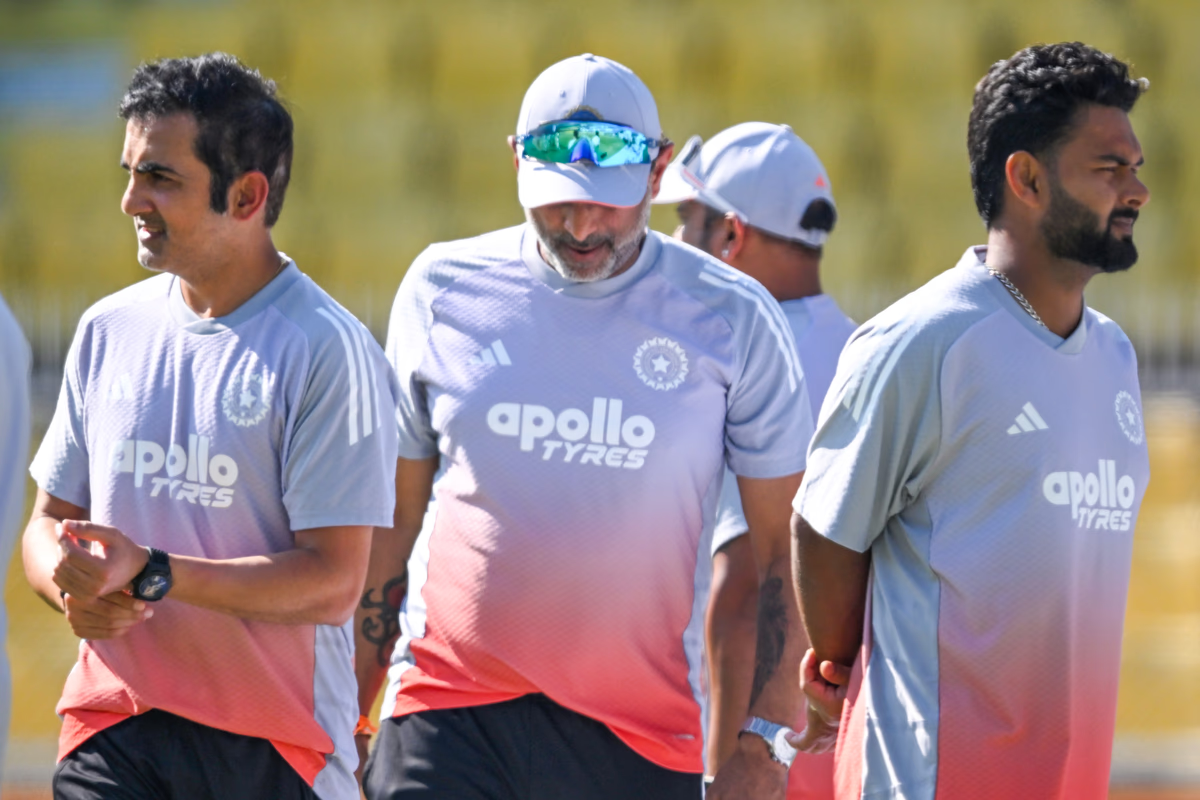
In the second Test between India and South Africa at Guwahati, India suffered its biggest losing margin in a home match—being hammered for 408 runs, the largest defeat by runs they have ever endured. The series ended in a clean sweep for the hosts, a feat that India has now achieved twice on home soil and has never experienced again.
Over the two matches, no Indian batsman reached a century and the team’s overall average across the series plummeted to 15.23, the second‑lowest home Test average ever. In the last seven home Tests, India’s record stands at four losses; two of those wins came against a weak West Indies side. The defeat pushed India down on the World Test Championship 2025‑27 ladder, denting their hopes of reaching the final. It was a humbling reminder of how far the once‑dominant home team has fallen.
Why did the run‑chase collapse? Here are five key reasons:
Shubman Gill’s injury – The captain was sidelined after a neck injury in the first innings in Kolkata. Missing his form, India was deprived of a player capable of batting steady for 30‑plus runs, a potential difference-maker in a low‑scoring chase.
Struggling openers – Both KL Rahul and Yashasvi Jaiswal, normally among the top four Test scorers for 2025, failed to cross 100 in the series. Their combined contribution was a mere 151 runs from eight innings, and India performed badly from the front end, scoring only one fifty‑run opening partnership.
Over‑reliance on all‑rounders – The squad saw a heavy presence of all‑rounders – Jadeja, Washington Sundar, Axar Patel, and later Nitish Kumar Reddy. While this strategy proved useful in T20Is, it backfired in Tests: the all‑rounders were underused with the ball and struggled to produce reputable runs, unlike the South African all‑rounders who were effective in both disciplines.
Unsound batting strategy – India adopted an overly aggressive approach, which paid off in short‑format games but in Tests they were forced to chase quickly. Across all four innings India played 240 overs for 653 runs, whereas South Africa used 338.4 overs and kept India tied down on the field. The aggressive tactics led to reckless shots and a lack of patient, sensible play.
- Selection and team balance – The departures of veteran stars like Virat Kohli, Rohit Sharma and Ravi Ashwin left a gap in leadership and experience. Coupled with a questionable selection for Mohammed Shami and the neglect of domestic performers such as Sarfaraz Khan and Ruturaj Gaikwad, the side’s balance suffered. The team also made awkward changes, dropping a proven performer (Washington Sundar) for a risky pick (Sai Sudharsan) in Guwahati, which added to the turmoil.

Takeaway
India’s current Test strategy, heavily influenced by T20 thinking and an overabundance of all‑rounders, is not translating into success on home soil. The Australian experience and that of many other former home‑dominant sides show that a settled core with specialist batters who can handle spin, coupled with clear role definitions, performs best. With the next Test set for August 2026 in Sri Lanka, India has ample time to reassess and rebuild a more coherent approach.
Stay informed on all the latest news, real-time breaking news updates, and follow all the important headlines in world News on Latest NewsX. Follow us on social media Facebook, Twitter(X), Gettr and subscribe our Youtube Channel.