
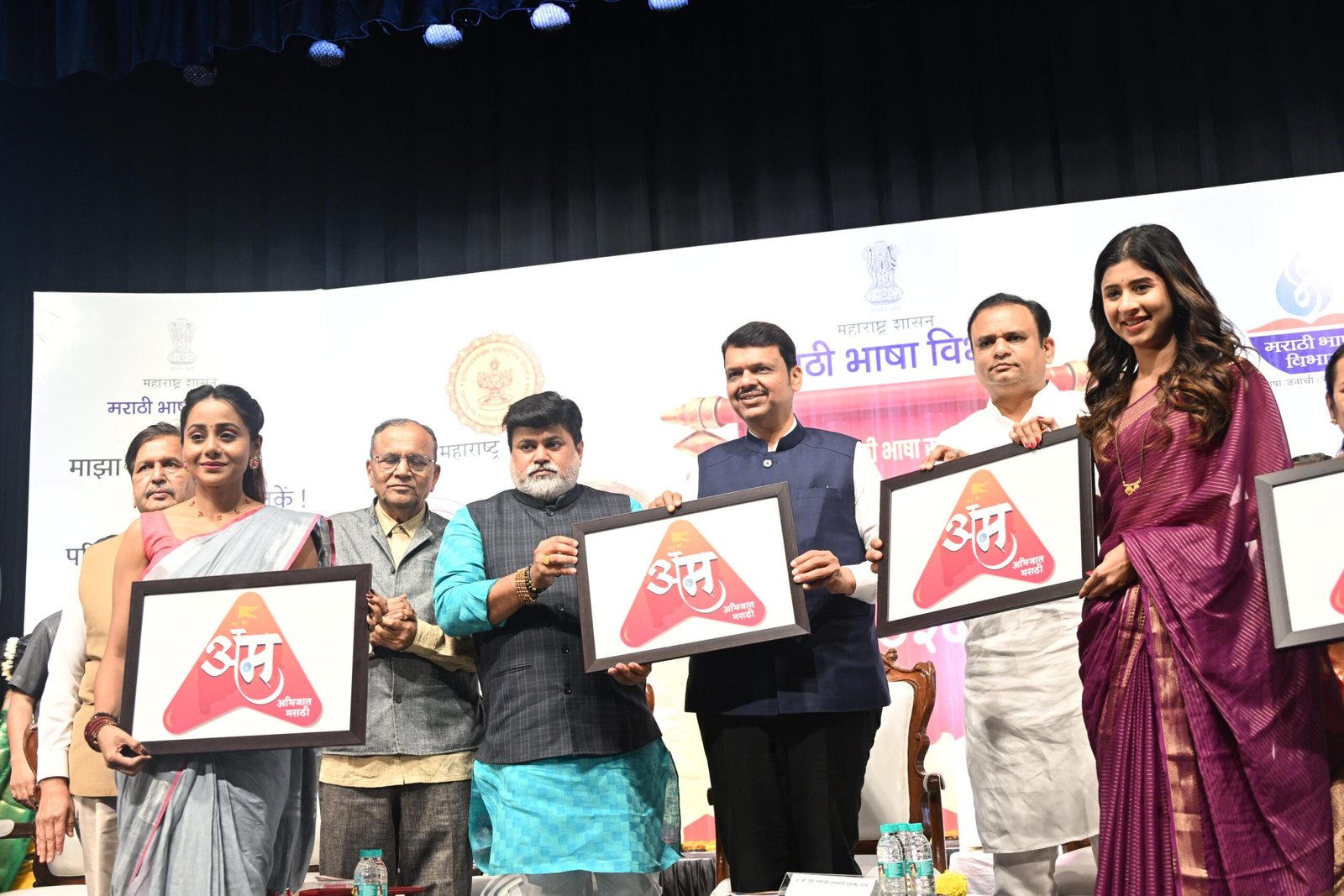
Mumbai, Oct 3 – Maharashtra Chief Minister Devendra Fadnavis celebrated the timeless beauty of the Marathi language during an event in the city. He declared that Marathi was a classical language in the past, remains one today, and will stay that way in the future.
“Language keeps our culture alive,” Fadnavis said. “Every language in India carries a rich cultural legacy. Since languages play such a big role in building culture, we all need to nurture our mother tongue and other languages too.”
Fadnavis made these remarks after kicking off the Abhijat Marathi Bhasha Samman Diwas and Abhijat Marathi Bhasha Week, events honoring the classical status of Marathi.
He painted a vivid picture of why Marathi deserves respect. “It’s about honoring the poets who recited Ovees in villages and homes. It’s the Vasudev singers who visit during Ramprahari mornings. It’s the aartis, bhajans, and kirtans ringing from temples. It’s the traditions of our saints and the poetry of great writers. From Sant Dnyaneshwar’s insightful Deepika on the Bhagavad Gita to Babasaheb Ambedkar’s deep philosophical ideas, Marathi connects us to all these thinkers.”
The chief minister highlighted Maharashtra’s strong literary scene. “A quarter of all libraries in India sit right here in our state. Marathi has grown so rich because people pass down their love for literature and ideas to the next generation.” He took pride in Marathi boasting the most literary dictionaries of any language and hosting over 200 literary conferences each year. “Marathi expresses every kind of thought and offers platforms for all voices.”

Even in the digital era, Fadnavis noted, Marathi books and literature rake in crores of rupees in sales. While theaters thrive in various languages across India, he pointed out some slowdowns, but praised Marathi enthusiasts and theater artists for building a vibrant Marathi stage tradition.
Marathi Language Minister Uday Samant echoed the enthusiasm, promising government efforts to put Marathi on the world map. “Marathi isn’t just a language—it’s the heartbeat of Maharashtra’s culture,” he said. “We’ll keep pushing this language of Dnyaneshwar, Tukaram, and Chhatrapati Shivaji Maharaj onto the global stage.”
Samant credited Marathi’s classical language status from the central government to its historic treasures, like the Dnyaneshwari, Tukaram Gatha, and Shivaji’s Marathi Rajkosh reference book. “This honor boosts Maharashtra’s prestige even more.”
Looking ahead, Samant shared exciting plans. The government will set up a Marathi language center at the prestigious Jawaharlal Nehru University (JNU) in Delhi, complete with a memorial for Chhatrapati Shivaji Maharaj. Near Nashik, Shirwade village will transform into a “book village.” A new Marathi festival, named after renowned writer Kusumagraj (V.V. Shirwadkar), will light up rural areas. And in a big move, they’ll buy the Maharashtra Mandal in London to create the world’s first Global Marathi Language Centre.
These steps aim to preserve and promote Marathi language and culture for generations to come.
Stay informed on all the latest news, real-time breaking news updates, and follow all the important headlines in world News on Latest NewsX. Follow us on social media Facebook, Twitter(X), Gettr and subscribe our Youtube Channel.