New triad with Pakistan, Bangladesh will only help facilitate China’s BRI push

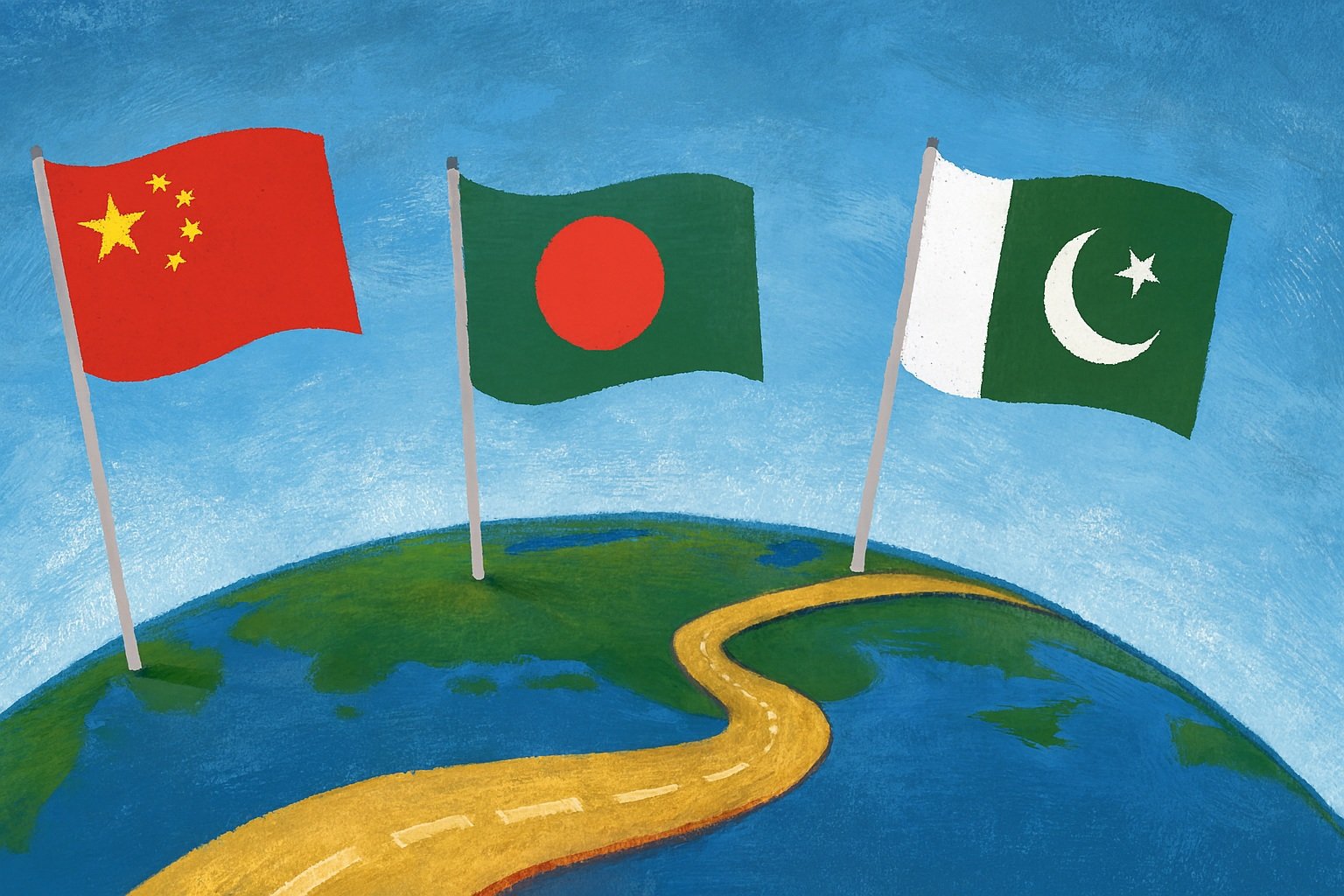
New Delhi, Dec 11 (LatestNewsX) – Pakistan’s recent move to deepen cooperation with China and Bangladesh mainly offers Beijing a chance to push its Belt and Road Initiative further, even as Islamabad grapples with massive debt. Rather than creating a full‑blown institutional bloc, the partnership is likely to bring about a handful of targeted projects aimed at improving connectivity and easing trade.
Sources report that Pakistan owes roughly USD 30 billion to China under the China‑Pakistan Economic Corridor. Many of those projects remain unfinished because of economic, security and environmental hurdles. In Bangladesh, BRI work includes the Rooppur Nuclear Power Plant, several ports and tunnels, the Karnaphuli Tunnel, and various power and infrastructure contracts. Estimates of Beijing’s financial reach vary; one figure puts Chinese investment at about USD 7.07 billion, while contracts awarded to Chinese firms total closer to USD 23 billion.
China’s ambassador to Bangladesh said Beijing had released about USD 4.45 billion for 35 BRI projects, a number that may not capture all China‑linked contracts outside the initiative. The goal for both Pakistan and Bangladesh appears to be to broaden the framework into a South Asian alternative that sidesteps India.
China remains the largest supplier of arms and equipment to the militaries of both states. Hence, building closer ties with India’s immediate neighbours holds strategic appeal for Beijing, amplifying pressure on the regional giant from three fronts. For Islamabad and Dhaka, the trio offers a stronger diplomatic and strategic posture against a far more powerful neighbour. Bangladesh’s deeper engagement with Beijing and Pakistan could give it more leverage in its current disputes, but how much it risks provoking New Delhi is still unclear.
The concept of this geopolitical triangle emerged at the first summit in Kunming, China, on June 19. Islamabad has been drifting apart from the South Asian Association for Regional Cooperation (SAARC) since India’s boycott of the Islamabad summit following Pakistan’s involvement in the 2016 Uri terror attack. Two years earlier, Pakistan had also blocked agreements that would allow cars and trucks to move freely across South Asia, and similarly derailed a regional railway collaboration.

With a combined population exceeding two billion, South Asian trade stands at only USD 23 billion, according to a World Bank report. India also participates in other regional groups such as the Bay of Bengal Initiative for Multi‑Sectoral Technical and Economic Cooperation (BIMSTEC), which excludes Pakistan. BIMSTEC includes Bangladesh, Bhutan, India, Myanmar, Nepal, Sri Lanka and Thailand, totalling about 1.73 billion people and generating around USD 1.95 trillion in trade.
The real question now is not whether this new grouping is politically appealing, but whether it is feasible to run and what wider geopolitical ramifications it could hold for South Asia.
Stay informed on all the latest news, real-time breaking news updates, and follow all the important headlines in world News on Latest NewsX. Follow us on social media Facebook, Twitter(X), Gettr and subscribe our Youtube Channel.