MTA boss brags about balancing MTA’s budget — as he ignores fare hikes, $1.5B in casino cash


M-T-give-us-A-break!
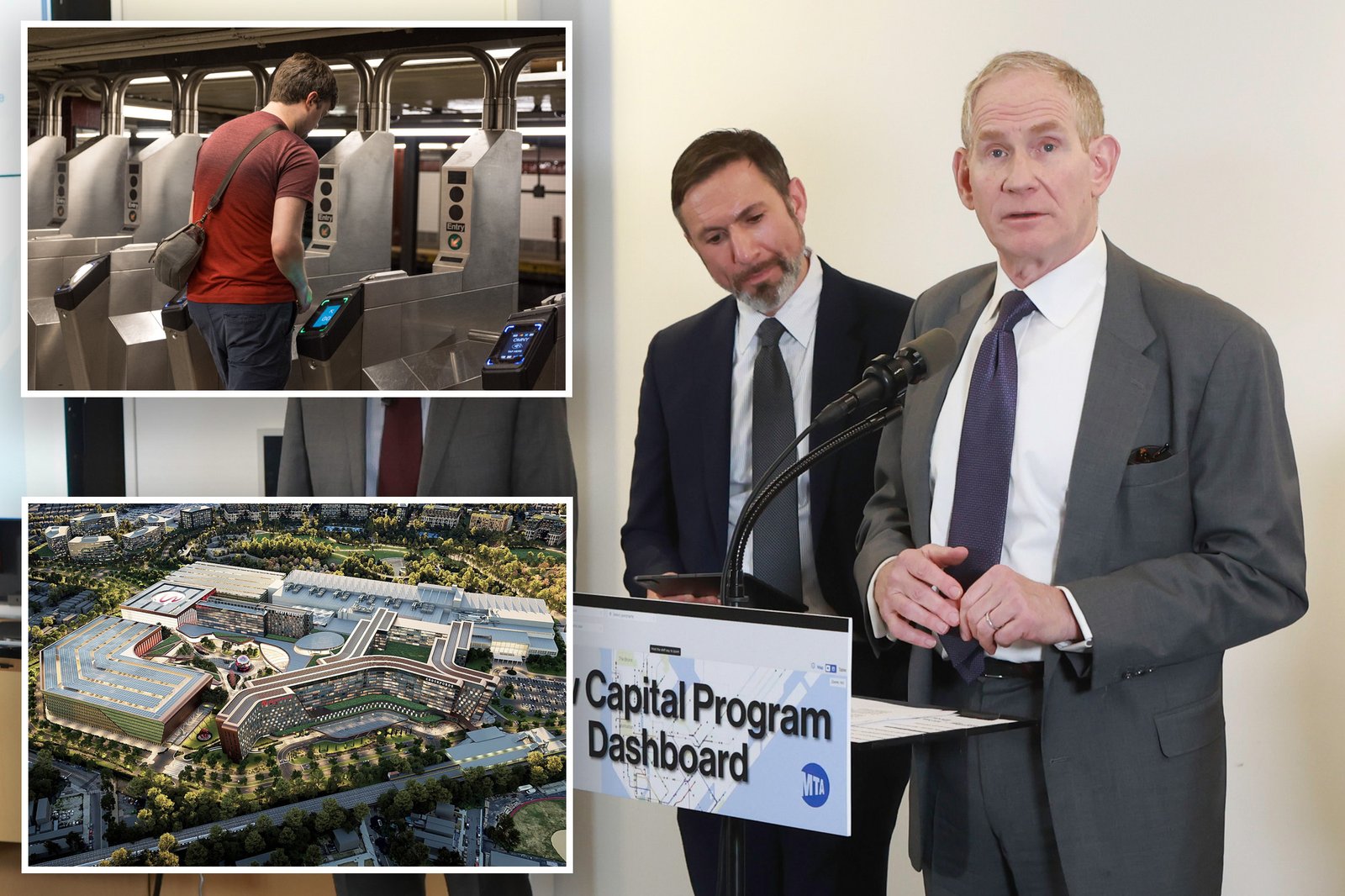
Janno Lieber, the head of the MTA, celebrated achieving a balanced budget on Tuesday, all while sidestepping fare increases and a $1.5 billion boost from new casino opportunities.
In a speech for New York Law School, Lieber highlighted the agency’s recovery from a $2.1 billion operating gap that had accumulated since he assumed leadership in 2021, and claimed the Metro is on target for its third consecutive balanced fiscal year.
He credited the turnaround to slashing $500 million annually by cutting redundant internal costs, tapping windfall revenue from congestion pricing, and tapping extra tax proceeds unlocked during last year’s state budgeting talks.



“We’re spending less in real terms than before COVID, doing more with spending less,” he boasted.
“Four years later this is a different MTA.”
However, the bright picture underlies several contingent funds the MTA’s board expects to receive—alongside steep costs that still fall on commuters.
The 2026 budget, which will be up for a vote soon, presumes the agency will get $200 million from FEMA, up to $600 million in new tax income, and $500 million from casino operations.
Those casino funds rest on licenses for three New York City gaming houses that were only cleared Monday, with final state approval still pending. The MTA projects a total of $1.5 billion from those licenses through 2028.
Even with optimistic revenue, the MTA has not clearly rewarded New Yorkers. Motorists now pay a $9 congestion‑pricing fee, while the board voted to raise the flat subway and bus fare to $3—a move deemed by one member to be a “hike” that stays below inflation.
“Subway and bus fares will be hiked to $3 in 2026,” the board noted in a statement.
Lieber, touting a forthcoming third straight balanced budget, insisted that the system actually needs to spend more.
He pointed to major construction successes that earned the MTA credibility in Albany, noting the L‑train overhaul completed in 2020—finished six months early and $100 million under budget—and the Long Island Rail Road’s Third Track project finished in 2022, also $100 million over budget.
Both projects wrapped up before Lieber took the helm and before the claimed era of balanced budgets.
While he highlighted the Second Avenue subway expansion, he omitted that the projected cost sits around $4.3 billion per mile, ranking it among the world’s most expensive subway projects.
“This is a system that has been evaluated as being worth ($1.5 trillion) and you have to invest the capital to maintain,” he said. “A basic business school principle (is that) you got to be spending a lot more than we are. But at least we’re increasing it just to head towards the state of good repair.”
Stay informed on all the latest news, real-time breaking news updates, and follow all the important headlines in world News on Latest NewsX. Follow us on social media Facebook, Twitter(X), Gettr and subscribe our Youtube Channel.