
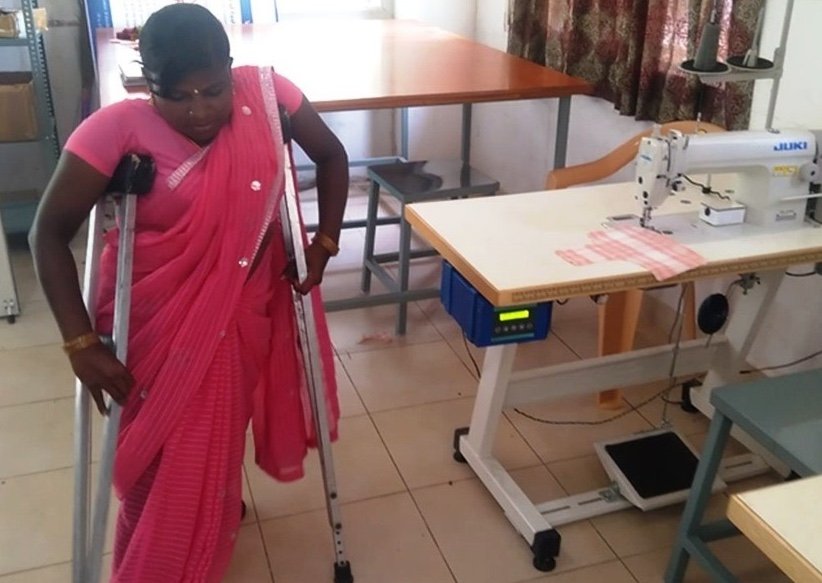
Indian researchers have come up with a game-changing twist on the traditional sewing machine, ditching the foot pedal for hand controls that make it accessible for everyone, especially women with mobility challenges. This innovative assistive technology is transforming lives in rural areas, helping differently-abled women stitch their way to independence and steady jobs in the garment industry.
The spark for this invention hit when a team at Sona College of Technology in Tamil Nadu spotted a big problem: many women with lower-limb disabilities couldn’t operate industrial sewing machines because of the foot pedal. So, a dedicated four-member group—D. Raja, K. Mani, G. Gunasekaran, and S.S. Suresh—jumped in to fix it. Their hard work paid off with three patents for sewing machine innovations that put control right in the user’s hands.
First up was the Load-Cell L-Plate Variant, patented in 2022. It swaps the foot pedal for a simple hand-press system, letting users handle all the standard sewing tasks without any hassle. Then came the Optical Sensor Variant in 2024, which uses hand gestures to run the machine—it’s hands-free, super light on effort, and boosts safety while adapting to different needs.
The latest star is the Haptic Glove Variant, patented in 2025. This wearable glove senses pressure from your palm and wirelessly powers the sewing machine motor. It’s comfy, ergonomic, and a shining example of inclusive design that makes sewing feel natural and easy.
These breakthroughs have been a hit from the start. Prototypes got tested with rural women facing locomotor disabilities, and the buzz spread fast. For the first time, differently-abled women can sew independently in garment units, tackling everything from basic stitching to full production. This means real opportunities to earn a living close to home, without relying on others.



Over the past nine years, Sona College has trained more than 300 differently-abled women to use these patented machines. It’s not just about skills in tailoring and garment production—it’s given them back their dignity and a strong sense of self-worth. “These patents aren’t just tech gadgets,” says Chocko Valliappa, Vice Chairman of Sona College. “They’re about smashing barriers, opening doors to jobs, and proving that inclusion belongs in our everyday tools.”
The Tamil Nadu government stepped up too, sponsoring 11 of these machines for a community center run by the college in Maramangalathupatti, Salem district. Another 300 women have learned there, building brighter futures one stitch at a time. Stories like these show how smart assistive technology for sewing machines is empowering women with disabilities across India.
Stay informed on all the latest news, real-time breaking news updates, and follow all the important headlines in world News on Latest NewsX. Follow us on social media Facebook, Twitter(X), Gettr and subscribe our Youtube Channel.