
MASSIMO BARSOUM/EPA/Shutterstock
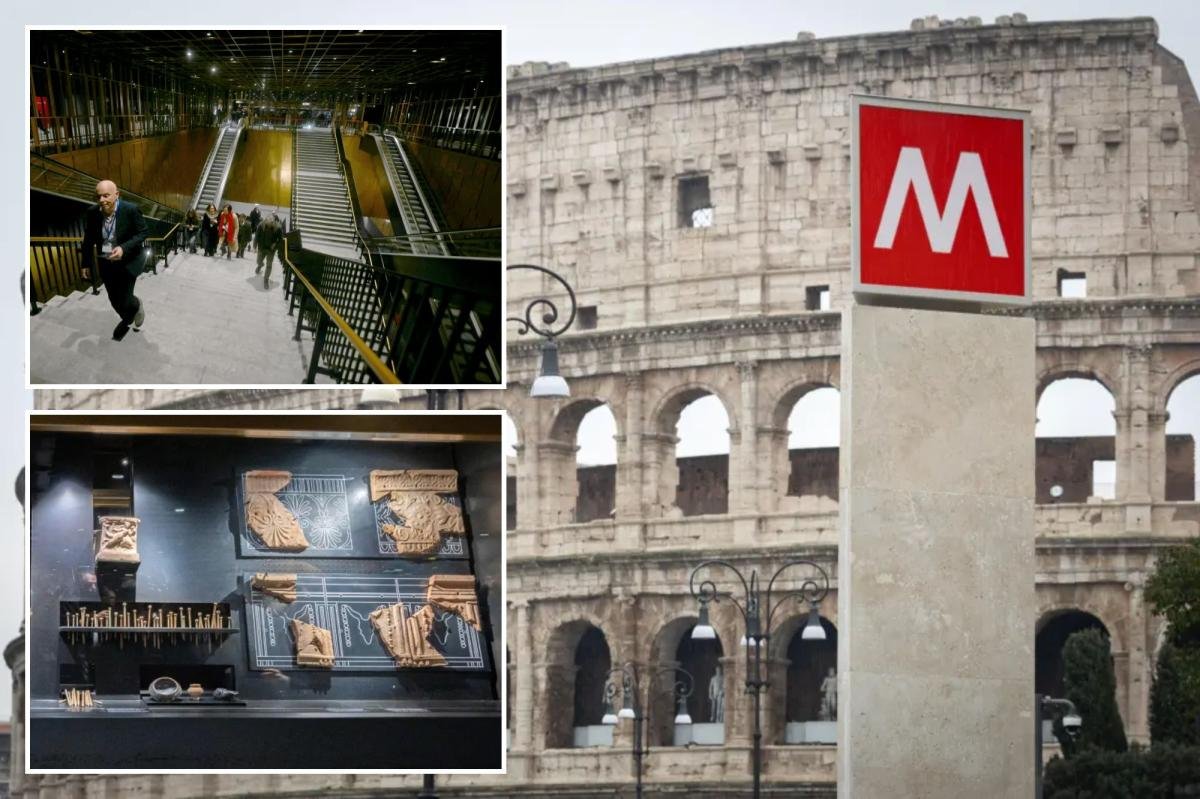
On Tuesday Rome opened two new metro stations, one of which is located deep beneath the Colosseum, melding contemporary transportation with treasures from ancient times.
Passengers entering the stop beside the iconic amphitheater are greeted by glass‑encased displays of ceramic vases, stone wells, suspended buckets, and the ruins of a first‑century cold‑plunge bath and thermal pool.
Video panels illustrate the excavation itself, giving history lovers a behind‑the‑scenes look while explaining why the station’s inauguration was delayed.
The €7‑billion Metro C line has been under construction for twenty years. Bureaucratic red tape, funding gaps, and the need to expose Roman and medieval underground layers have all slowed progress.
The construction consortium’s manager, Marco Cervone, explained, “The challenge was … building it under such a large amount of groundwater and at the same time preserving all the archaeological finds that we found during the excavation, and all this while preserving everything that is above.”



According to the operator’s press office, 31 stops are planned, roughly 24 are already open, and the line should be finished in 2035, costing about €7 billion ($8.3 billion).
Also unveiled that day was the Porta Metronia station, situated about 30 m (≈100 ft) below street level and just one stop beyond the Colosseum stop. Scientific director Simona Moretta announced the discovery of an almost 80‑metre long military barracks from the early second century, uncovered between 7 and 12 m beneath the surface.
She explained that the building’s military character is evident because its room entrances are staggered, allowing soldiers to move without colliding in the corridor. The troops were likely imperial guards or city defenders.
Moretta also reported a well‑preserved dwelling with vivid frescoes and mosaics, and she said plans are underway to open a museum inside the station.
Working in Rome’s heart inevitably encounters layers of up to three thousand years of history. WeBuild, the consortium building Line C, has already recovered more than 500,000 artifacts.
To protect fragile layers, workers use ground‑freezing techniques and erect sacrificial diaphragms—concrete barriers angled against the perimeter walls that are removed as excavation proceeds.
Beyond the Colosseum, the line will pass beneath other key landmarks such as Trajan’s Column, Maxentius’s Basilica, Renaissance palaces, churches, and the Vatican. The next stop is Piazza Venezia, the true core of the city. Cervone said trains there will descend to 48 m (≈157 ft) underground when the station opens in 2033.
When completed, Line C will span 29 km (18 mi), with 20 km (12 mi) underground, and is expected to serve up to 800,000 passengers daily. Visitors to the Colosseum and other historic sites will find it easier to avoid Rome’s notoriously congested streets, which have become even more blocked in recent years by construction projects.
Stay informed on all the latest news, real-time breaking news updates, and follow all the important headlines in world News on Latest NewsX. Follow us on social media Facebook, Twitter(X), Gettr and subscribe our Youtube Channel.