
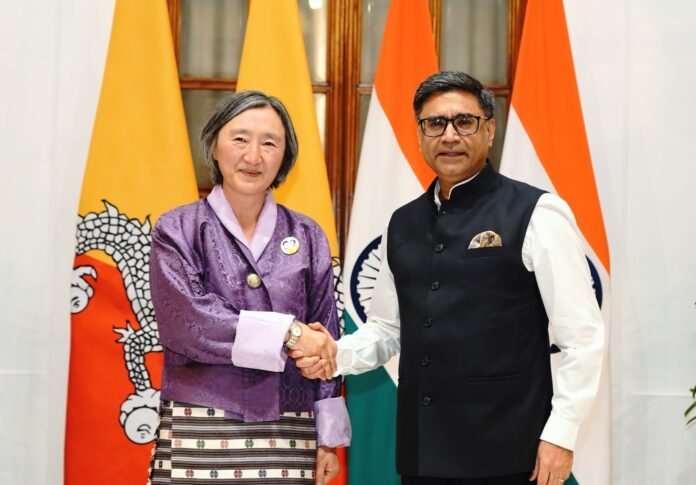
India and Bhutan took a big step toward closer ties on Monday by signing a key agreement to build new railway connections across their shared border. The deal, inked during a visit by Bhutan’s Foreign Secretary Aum Pema Choden to New Delhi, sets up the first cross-border rail links between the two nations.
These projects focus on two main routes: one linking Kokrajhar in India’s Assam state to Gelephu in Bhutan, and another connecting Banarhat in West Bengal to Samtse in Bhutan. According to India’s Ministry of External Affairs (MEA), the moves will boost connectivity, ramp up trade, and bring people from both countries even closer together.
India’s Foreign Secretary Vikram Misri met with Choden to discuss a wide range of partnerships. In a statement after their talks, the MEA highlighted how these rail initiatives fit into bigger goals for stronger economic and personal bonds. The two sides also celebrated recent wins, like the full startup of the 1,020-megawatt Punatsangchhu-II hydropower project—a huge milestone in their joint energy vision. They gave a thumbs-up to ongoing development efforts backed by India under Bhutan’s 13th Five-Year Plan, which are delivering real benefits to Bhutanese communities.
Earlier that day, India’s Union Railways Minister Ashwini Vaishnaw shared exciting details about these India-Bhutan railway projects. He emphasized the shared push for better regional links, sustainable growth, and economic teamwork. The Northeast Frontier Railway confirmed the plans: a 69-kilometer track from Kokrajhar to Gelephu and a 20-kilometer line from Banarhat to Samtse. Together, these efforts carry an estimated cost of 4,033 crore rupees and promise a major lift for trade, tourism, and everyday exchanges.
Samtse and Gelephu stand out as Bhutan’s key spots for imports and exports along their 700-kilometer border with India. Bhutan is turning Gelephu into a mindfulness city and Samtse into a bustling industrial hub. To speed things up, officials have tagged the Kokrajhar-Gelephu line as a special railway project, which means quicker approvals and land acquisition.
On funding, India’s Ministry of Railways will cover the work inside its borders, while the government supports Bhutan’s side through the MEA as part of the 13th Five-Year Plan. This setup keeps most of the infrastructure on the Indian side but fully backs Bhutan’s growth needs.
As Bhutan’s largest trading partner, India sees these cross-border rail links as a game-changer for deepening economic ties and fostering balanced development in the region.
Stay informed on all the latest news, real-time breaking news updates, and follow all the important headlines in world News on Latest NewsX. Follow us on social media Facebook, Twitter(X), Gettr and subscribe our Youtube Channel.