
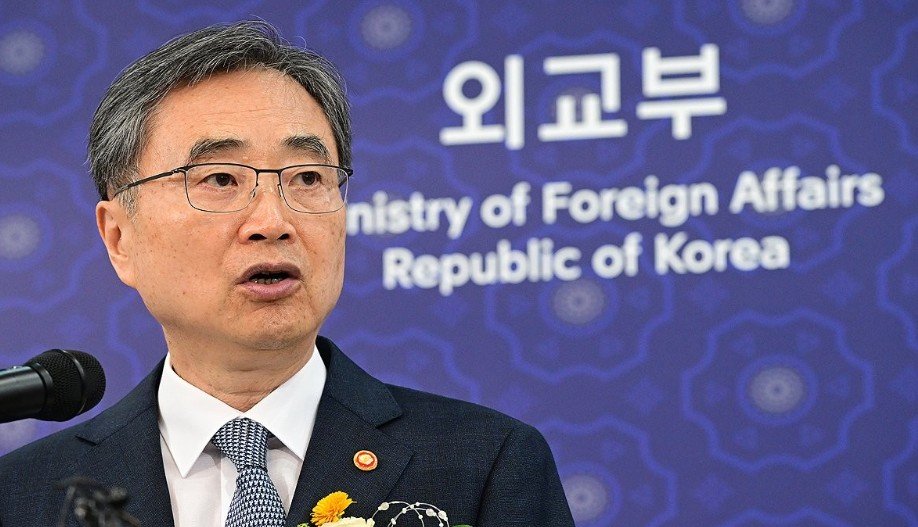
On December 4, 2024, LatestNewsX reported that South Korea’s foreign minister Cho Hyun stressed that diplomatic engagement with North Korea must run parallel to joint initiatives from Seoul and Washington aimed at bolstering deterrence against the increasingly defiant regime.
During a video address at a Washington‑based forum on Wednesday, Cho reflected on a newly released joint fact‑sheet outlining South Korea‑U.S. security and trade agreements. He described the document as charting a way toward a “future‑oriented, comprehensive strategic” partnership.
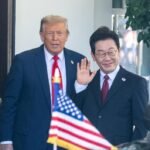
The fact‑sheet, issued on November 13, details a series of deterrence measures, including President Donald Trump’s support for Seoul’s bid to acquire nuclear‑powered, conventionally‑armed submarines and the South Korean pledge to raise defence spending to 3.5 % of GDP.
“At the heart of this partnership lies our shared commitment to peace and stability,” Cho said at the event jointly hosted by the Center for Strategic and International Studies and the Korea Foundation. “Securing peace on the Korean Peninsula, therefore, remains the foundation of our joint endeavour.” He added, “Yet, deterrence must be paired with diplomacy. We need to prevent inadvertent conflict, de‑escalate tensions, and restore dialogue with North Korea.”
Both Seoul and Washington have expressed a willingness to resume talks with Pyongyang, but it is unclear whether the North will accept repeated overtures, especially as its dependence on Russia for food, fuel and other essentials has grown, Yonhap reports.
The minister noted that the fact‑sheet reaffirms the “ironclad” character of the alliance and aims to strengthen peace while preparing for future challenges.
Emphasizing President Lee Jae Myung’s “pragmatism”-based diplomacy, Cho highlighted Seoul’s “principled” stance in navigating the evolving geopolitical landscape and underscored trilateral cooperation with Japan as “indispensable.” He said, “Beyond the Korean Peninsula, we must navigate a swiftly evolving strategic landscape—Russia’s tightening ties with North Korea, China’s expanding influence, and Japan’s shifting strategic posture. All of these factors shape the environment we must navigate.” “Korea intends to handle these shifts with a principled approach, mitigating strategic risk while broadening cooperative channels across Northeast Asia,” he added.
Cho pledged to advance ties with both China and Japan, potentially through a trilateral framework, even amid the latest flare‑up between Beijing and Tokyo over Prime Minister Sanae Takaichi’s comments on Taiwan.
Another cornerstone of “alliance modernisation” is the strategic economic and technological collaboration between the two nations, he said, citing a recently finalized trade and investment pact. “Korea and the U.S. are primed to usher in a new industrial era, boosting U.S. manufacturing while unlocking fresh prospects for Korean enterprises,” he pronounced. “The agreement builds the groundwork for enhanced cooperation in shipbuilding, energy, biotechnology, artificial intelligence, quantum tech, and beyond.”
He highlighted the importance of the U.S. backing Korea’s initiative to acquire uranium‑enrichment and spent‑fuel reprocessing facilities for peaceful use, as well as President Trump’s endorsement of Seoul’s pursuit of nuclear‑powered submarines. “These steps will substantially fortify our joint capabilities in next‑generation energy, defence, and shipbuilding,” he stated.
“For over seven decades, the ROK‑U.S. alliance has evolved alongside the tides of history. Our leaders recognize the imperative to modernise the alliance in a future‑oriented way, ensuring we meet the demands of a swiftly changing world.”
Stay informed on all the latest news, real-time breaking news updates, and follow all the important headlines in world News on Latest NewsX. Follow us on social media Facebook, Twitter(X), Gettr and subscribe our Youtube Channel.