

Thailand and Cambodia Sign Ceasefire at Chanthaburi Border Following Escalated Conflict
Chanthaburi, Thailand – December 27 – Thailand’s Defense Minister Natthapon Nakpanich and Cambodia’s Deputy Prime Minister‑Defense Minister Tea Seiha signed a ceasefire agreement at a checkpoint on the Chanthaburi border, marking a pause after a series of clashes that intensified in early December.
The talks began around 9:40 a.m. local time on Saturday, when both sides met in the same checkpoint to review a draft joint statement approved during the third Special Cambodia‑Thailand General Border Committee meeting on Friday night. ASEAN observers were present, and the Cambodian Ministry of Defence confirmed that the parties had settled the document’s contents, according to Xinhua.
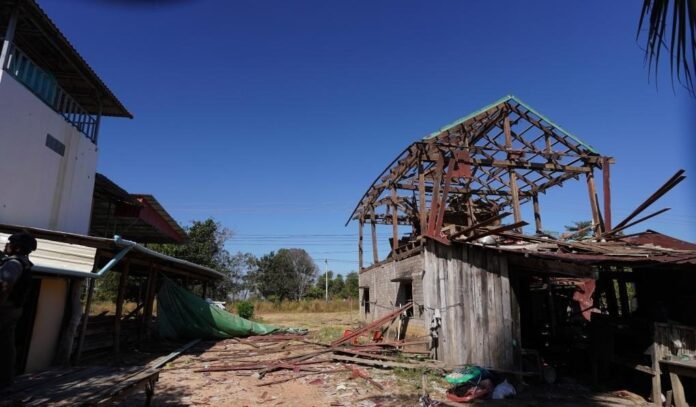
The conflict that led to the renewed hostilities began when a ceasefire that had held since July fell apart on December 8–9. Thailand responded with fighter‑jet patrols and artillery barrages, while Cambodia fired rockets in retaliation. The fighting spread across disputed sections of the border, especially around the Dangrek mountain range that straddles northeastern Thailand and northern Cambodia. The area is notable for its ancient Khmer temples, many perched on elevated terrain that both sides have claimed access to. Troop movements, shelling, and air missions have recurred in these contested zones, raising concerns about a broader spillover.
The border dispute traces back to the early 1900s, when French colonial authorities drew maps that both nations now argue were inaccurate or did not respect natural watershed boundaries referenced in earlier agreements. A long‑standing flashpoint is the Preah Vihear temple. In 1962, the International Court of Justice ruled that the temple itself was Cambodian territory, but the court did not lay out clear ownership of the surrounding land, leaving room for interpretation on both ends.
During the December flare‑up, U.S. President Donald Trump said he had spoken separately with the leaders of Thailand and Cambodia and claimed that they had agreed to stop the fighting. He described the discussions as “positive,” noting that both governments pledged to “cease all shooting” and work toward restoring a peace arrangement similar to those that had lapsed in previous years.
Despite those assurances, reports of sporadic clashes continued into the following days, underscoring the gap between diplomatic statements and what was happening on the ground. Both Thai and Cambodian officials later admitted that while outreach had occurred, the conditions for a comprehensive ceasefire had not yet been met.
Thailand’s caretaker Prime Minister Anutin Charnvirakul told reporters that he had spoken with Trump and that Thai forces would keep operating until there were no further threats to Thai territory or civilians. He accused Cambodian troops of violating the ceasefire and warned that the situation remained fragile along the frontier.
Meanwhile, Cambodian Prime Minister Hun Manet reiterated the country’s commitment to peace and dialogue. In public statements and on social media, Phnom Penh called for continued ceasefire talks and diplomatic engagement while accusing Thailand of escalating military activity in disputed zones.
The roots of the current flare‑up lie in earlier incidents. In May, a standoff near the Emerald Triangle—where Thailand, Cambodia, and Laos meet—resulted in the death of a Cambodian soldier. By July, both sides had resumed artillery exchanges and deployed heavy weapons across multiple border posts, prompting large‑scale evacuations of civilian populations.
Although a ceasefire resumed later that month brought a brief lull, isolated skirmishes persisted. The renewed hostilities in December culminated in additional military casualties and eventually shattered the most recent truce.
Both governments have confirmed that soldiers were killed and others wounded during the clashes. Civilians in border communities have also suffered, with tens of thousands displaced during the July fighting and again after the December escalation.
ASEAN member states have urged Thailand and Cambodia to resume negotiations, emphasizing the need to prevent further civilian displacement and restore calm along the frontier.
—End of report
Stay informed on all the latest news, real-time breaking news updates, and follow all the important headlines in world News on Latest NewsX. Follow us on social media Facebook, Twitter(X), Gettr and subscribe our Youtube Channel.