

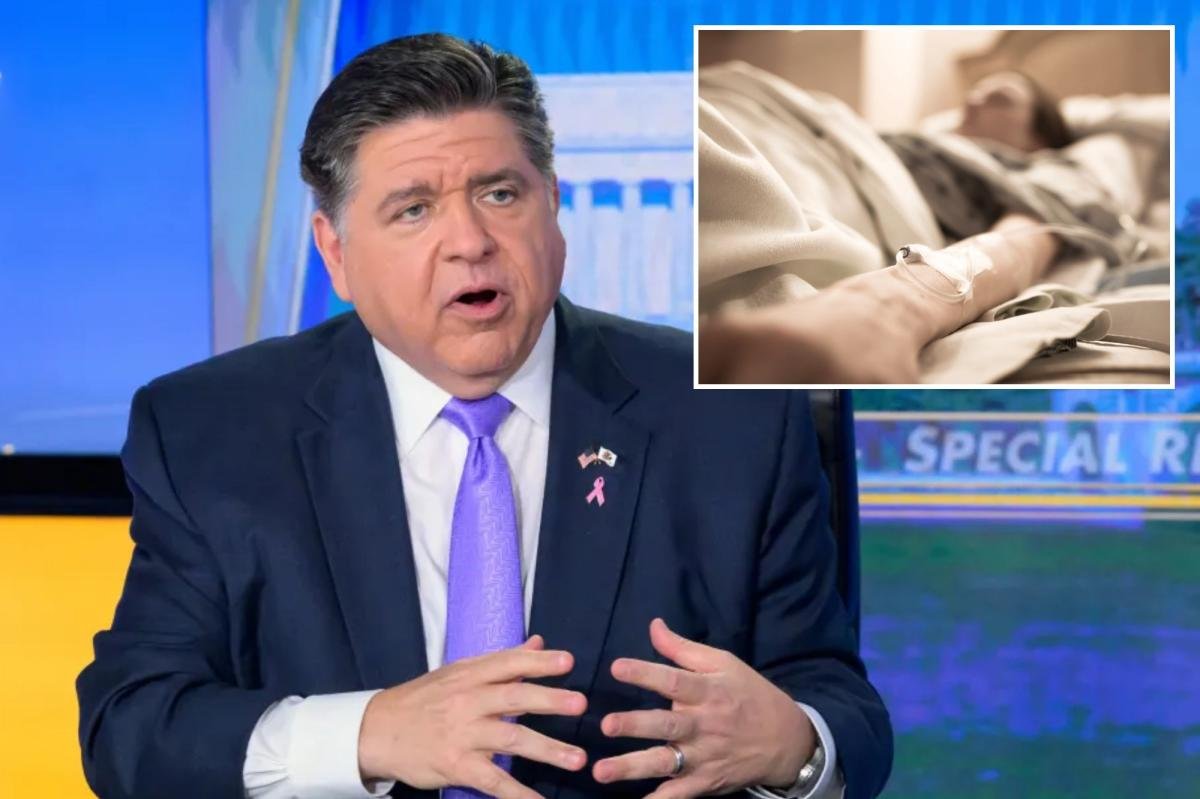
On Friday, Illinois Gov. JB Pritzker signed a new law that allows eligible adults with terminal illnesses to obtain medication that ends their life, in consultation with a treating physician. In doing so, the state becomes the newest jurisdiction to legalize physician‑assisted suicide for patients projected to survive six months or less.
The statute, officially titled the Medical Aid in Dying bill and informally dubbed “Deb’s Law,” won’t become active until September 2026. That delay gives doctors, hospitals, and the Illinois Department of Public Health (IDPH) ample time to develop the required safeguards and procedures.
The bill was named for Deb Robertson, a lifelong resident of Illinois who has lived with a rare terminal disease. In a statement she said she “knows the end for me could be near. But I’m pleased to have been able to play some role in ensuring that terminally ill Illinoisans have access to medical aid in dying.”
Gov. Pritzker, a member of the Democratic Party, emphasized that the new law is meant to spare terminal patients from “unnecessary pain and suffering at the end of their lives,” and that it will be carried out in a way that lets physicians work closely with patients on making deeply personal decisions with “authority, autonomy and empathy.”
The ACLU of Illinois praised the legislation, stating that individuals in the state “no longer have to agonize about spending their remaining days fearful of a painful death.”
While the governor’s office released a supportive statement from Chicago Episcopalian minister Rev. Judith Doran, other organizations expressed opposition. The Catholic Conference of Illinois released a statement in September arguing that the measure is “not the compassionate solution for those who are suffering.” They warned that expanded palliative care, greater access to mental‑health services, and stronger family and community support could provide more respectful alternatives to assisted suicide.
The church also cautioned about “unintended consequences,” noting documented cases in which insurers have denied life‑saving treatments in favor of the cheaper option of ending a patient’s life. They highlighted concerns for “the poor and those with disabilities,” who they say are particularly susceptible to such abuses, and added that every major national disability‑advocacy organization opposes assisted suicide.
Under the new law patients must self‑administer the prescribed medication, and any attempt to coerce someone into requesting the drug or to forge a request is a felony. Patients who qualify retain the right to withdraw their request at any time or to decline to take the medication.
Death certificates filed for those who voluntarily end their lives under the statute will list the underlying terminal disease as the cause of death.
The Thomas More Society, a national public‑interest law firm, released a statement in the afternoon of the signing day, calling the law a “moral and legal red line.” Executive vice president Thomas Olp wrote, “This is a dark and sorrowful day for Illinois. When the state signals that some lives are no longer worth living, the most vulnerable pay the price.” He further described the statute as a fatal prescription that amounts to “abandonment” rather than mercy.
Beyond its moral and social implications, the firm argued the law infringes on the conscience rights of physicians who refuse to participate in assisted suicide. It also threatens the freedom of religious medical institutions that are opposed to such practices.
Physicians, healthcare providers, and pharmacists are not mandated to participate, but the bill requires doctors who object on moral or religious grounds to refer patients to willing providers. “The State is forcing doctors to become active participants and cooperators in a patient’s suicide—no matter if their faith, ethics, or Hippocratic Oath forbid it,” Olp said. He called the mandate “unconscionable coercion.”
The law’s referral requirements also extend to religious hospitals and clinics, which must retain staff who help facilitate assisted deaths on‑site, even if those staff members dispense the lethal drugs elsewhere. Olp warned that “this is a Trojan horse designed to violate and undermine the missions of religious healthcare institutions.” He added that “state law should never endorse the idea that suffering or sickness makes a life disposable.”
If anyone around the U.S. is experiencing suicidal thoughts or a mental‑health crisis, the National Suicide Prevention Lifeline can be reached 24/7 at 988. Those in New York City can call 1‑888‑NYC‑WELL for free, confidential crisis counseling.
Stay informed on all the latest news, real-time breaking news updates, and follow all the important headlines in world News on Latest NewsX. Follow us on social media Facebook, Twitter(X), Gettr and subscribe our Youtube Channel.