
‘They say it’s suicide, but it’s 100% murder’: W. Va. teen died three hours after being ‘sextorted,’ as groups like 764 target US kids

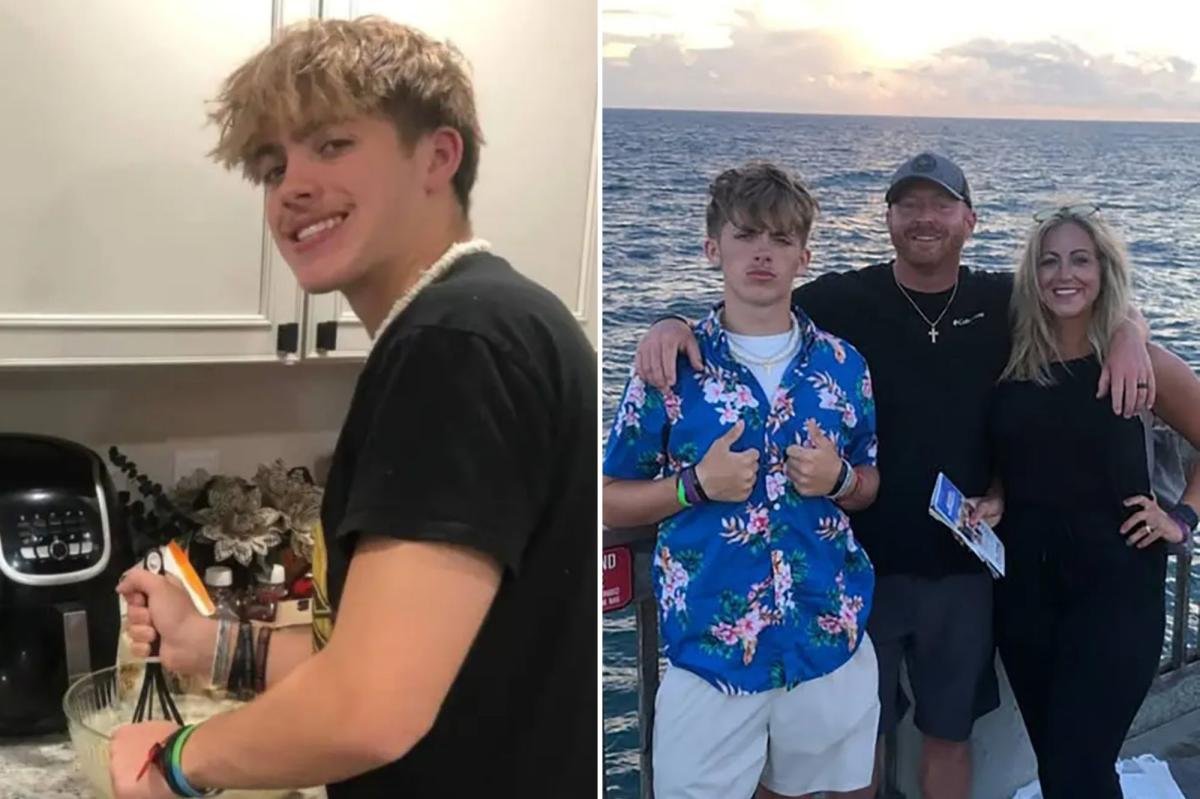
The afternoon that 15‑year‑old Bryce Tate was targeted by a sextortion scheme began like any other Thursday. Fresh from gym class in Cross Lanes, West Virginia, the sophomore returned home, devoured a plate of mom‑made tacos, and then headed outside to shoot a few hoops. At 4:37 p.m., a text from an unfamiliar number appeared on his phone.
Three hours later, authorities discovered Bryce in his father’s “man cave” with a self‑inflicted gunshot wound. While the police and the FBI announced the death as a suicide, Adam Tate, Bryce’s dad, insisted, “They say it’s suicide, but in my book it is 100% murder.” He went on to describe the perpetrators as “godless demons, … cowardly, awful individuals, worse than criminals.”
According to Adam, Bryce was the latest victim of a vicious online sextortion plot that law enforcement says is on the rise. A spokesperson for the National Center for Missing and Exploited Children told the paper that the group had tracked more than 33,000 sextortion reports in 2024 alone, with almost as many in the first half of 2025. These scammers scour public social‑media profiles to learn about a teen, then pose as a flirtatious peer. “They acted like a local 17‑year‑old girl. They knew which gym he worked out at, they knew a couple of his best friends and name‑dropped them. They knew he played basketball for Nitro High School,” Adam recounted. “They built his trust to where he believed that this was truly somebody in this area.”
Bryce’s situation shows the hallmarks of the well‑known, international child‑exploitation ring, 764, which operates in Russia, Europe, Africa and the United States. Within three hours of the first threatening message, Bryce had killed himself. The Post reports that the images Bryce received were not generated by AI, but most likely of a real girl who had already been victimized. The scammers demanded erotic photos; once they obtained them, they would extort money, threatening to expose the pictures to family and friends. For Bryce, the demanded amount was $500.
“My son had 30 freaking dollars and he’s like, ‘Sir, I’ll give you my last $30.’ And these cowards wouldn’t take it,” Adam tearfully told the Post, describing his son’s final exchange.




If the target lacks money to pay via untraceable methods such as gift cards or cryptocurrency, the extortionists threaten violence. In Bryce’s case, they allegedly urged him to kill himself, saying “because your life is already over.” Just before he died, Bryce was sent 120 messages, a tactic designed to keep teens compulsively engaged and unable to put their phones down.
FBI public‑affairs specialist Bradford Arick pointed out that the agency has seen a sharp increase in sextortion cases involving children and teens being coerced into sending explicit images online. The same approach was used in a 2022 incident in Mississippi where high‑school football star Walker Montgomery, 16, committed suicide after an Instagram contact from a Nigerian scam artist turned out to be malicious. Other teens—Waylon Scheffer of Montana, Ryan Last of California (who had been working as a money mule for Ivory Coast scammers and later sentenced to 18 months), and Jordan DeMay of Michigan—all died after similar extortion attempts. No arrests have been made in connection with Montgomery or Scheffer, but Nigerian brothers Samuel and Samson Ogoshi were extradited to the U.S. and sentenced to 17 years for their role in DeMay’s death.
The FBI has identified children as young as 11 as victims of this scheme. While it has declined to discuss specifics in Bryce’s case, the sadistic content he received exemplifies the tactics of 764, which has infiltrated global networks. On December 3, five U.S. members of the 764 offshoot “Greggy’s Cult,” including a Navy sailor, were indicted by the Department of Justice. In a recent press release, the FBI described 764 as “a violent online network that seeks to destroy civilized society through the corruption and exploitation of vulnerable populations, which often include minors.” Attorney General Pam Bondi called the network “one of the most heinous online child exploitation enterprises we have ever encountered.”
Earlier this year, NYPD Commissioner Jessica Tisch and Deputy Commissioner for Intel and Counterterrorism Rebecca Weiner warned about the cult in an op‑ed, noting that dismantling such virulent networks is a top national‑security priority in the United States and Europe, yet many parents remain unaware of their existence.
The Tates were baffled by the tragedy, having never heard of sextortion until local police, after a forensic analysis of Bryce’s phone, referred the case to the FBI. Bryce was known to weightlifters and classmates as an honor‑roll student with an infectious smile; he even worked as a youth leader in a Christian fellowship, helping classmates through tough times. Adam, 38, reminisced, “I had the utmost respect for my son. He was hilarious, funny, goofy. If you were around him and you were having a bad day, you could not help but get in a better mood and laugh and just enjoy that light that he was.”
Federal law enforcement claims these exploitation scams against teenage boys have skyrocketed as decentralized international crime rings employ increasingly twisted tactics to torment teens online. “I just want people to know that having that safe space and that close family is not enough. They have to be aware of what the threat is. You have to have that conversation,” Adam said, urging open dialogue about online dangers.
The first responder on the scene, Sgt. Jeremy Burns of the Kanawha County Sheriff’s Office, emphasized preventive measures: “Kids should lock their social media from strangers. Whether it’s Facebook, Instagram, Snapchat or TikTok, set it so you have to authorize who follows you. Don’t leave it public. Don’t send sexual pictures to anyone you don’t know.”
Currently, Adam is lobbying West Virginia lawmakers for “Bryce’s Law,” an amendment to a proposed cyberbullying bill that would impose harsher penalties for crimes that lead to self‑harm or suicide. He believes that building a relationship where kids feel comfortable speaking is essential, but it must be coupled with awareness of these hidden threats.
Stay informed on all the latest news, real-time breaking news updates, and follow all the important headlines in world News on Latest NewsX. Follow us on social media Facebook, Twitter(X), Gettr and subscribe our Youtube Channel.