
India and Iceland are teaming up to boost their fisheries and aquaculture sectors, focusing on sustainable practices, zero-waste approaches, tech sharing, and cluster-based growth. The Indian government announced this exciting development on Friday, highlighting how it could transform the industry for both nations.
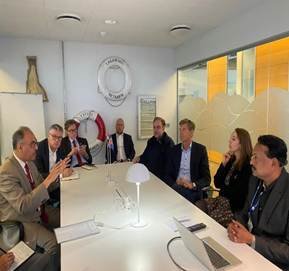
A high-level Indian team, headed by Dr. Abhilaksh Likhi, Secretary of the Department of Fisheries, wrapped up a three-day visit to Reykjavík, Iceland’s capital. The goal? To build stronger ties through partnerships, investments, and fresh ideas in the fisheries world. Likhi held talks with top officials from the Iceland Ocean Cluster, diving into topics like innovative fish processing, adding value to products, tracking supply chains, and certification standards.
Leading Icelandic firms BRIM and Hampiðjan shared their secrets on zero-waste models and state-of-the-art processing tech. Both countries spotted big chances for Icelandic seafood businesses to invest in India and ramp up business-to-business connections. “This could open doors for real growth in the seafood industry,” an official statement noted.
The delegation also toured MATIS, Iceland’s premier food and biotech research hub. They chatted about teaming up on biotechnology, food safety, and making the most of marine resources. This visit paves the way for joint research and tech transfers to strengthen India’s entire fisheries value chain.
Training programs took center stage too, especially for deep-sea fishing tech and advanced vessel monitoring systems (VMS). The talks covered opportunities in trout farming, tuna innovations for India’s islands, and more.


Back home, India’s fisheries sector is booming under the Pradhan Mantri Matsya Sampada Yojana (PMMSY). The government has rolled out 34 clusters to connect businesses of all sizes—from tiny startups to big players—across the value chain, from catching fish to exporting it. This cluster-based development model boosts efficiency and competitiveness.
Fish production in India has skyrocketed by 104% over the past decade, jumping from 96 lakh tonnes in 2013-14 to 195 lakh tonnes in 2024-25. Inland fisheries led the charge with a massive 142% rise, from 61 lakh tonnes to 147.37 lakh tonnes. No wonder India ranks as the world’s second-largest fish producer, accounting for about 8% of global output.
These steps show how international collaborations in sustainable fisheries and aquaculture can drive innovation and growth for India and beyond.
Stay informed on all the latest news, real-time breaking news updates, and follow all the important headlines in world News on Latest NewsX. Follow us on social media Facebook, Twitter(X), Gettr and subscribe our Youtube Channel.