EU leaders agree on 90 billion euro loan to Ukraine after plan to use Russian assets unravels


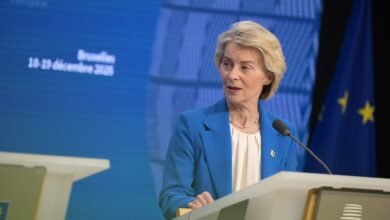
On Friday, European Union leaders settled on an enormous interest‑free loan to aid Ukraine over the next two years, but they could not reconcile Belgium’s concerns about tapping frozen Russian assets to fund it.
The International Monetary Fund projects that Ukraine will require roughly 137 billion euros ($161 billion) each year in 2026 and 2027. With the fiscal situation in Kyiv on the edge of collapse, the government urgently needs the capital by early spring.
Initially, the plan involved leveraging a portion of the 210 billion euros ($246 billion) in Russian assets locked up in Europe—most of which sit in Belgium—to raise the funds.
After nights into Thursday, officials worked hard to convince Belgium that it would be shielded from any Russian reprisal if it endorsed the “reparations loan” scheme. As the negotiations stalled, the group ultimately chose to secure the money through capital markets.
“We have a deal. Decision to provide 90 billion euros ($106 billion) of support to Ukraine for 2026-27 approved. We committed, we delivered,” EU Council President António Costa wrote on social media.

Not every nation was on board. Hungary, Slovakia and the Czech Republic opposed the package, yet they refrained from blocking it after assurances of protection against any financial fallout.
Hungarian Prime Minister Viktor Orbán, a keen ally of Russian President Vladimir Putin and a self‑styled peacemaker, remarked, “I would not like a European Union in war.” He added, “To give money means war,” and dismissed the idea of using frozen Russian assets as a “dead end.”
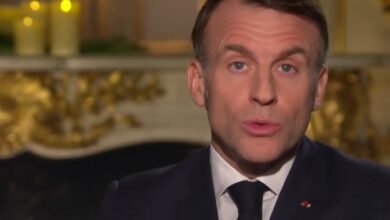
French President Emmanuel Macron hailed the agreement as a major step, calling borrowing on capital markets “the most realistic and practical way” to fund Ukraine’s war effort.
German Chancellor Friedrich Merz echoed the sentiment, announcing, “The financial package for Ukraine has been finalized,” and noted that the loan would carry zero interest.
He emphasized that the sums would cover both military and fiscal needs for the coming two years, and that the frozen assets would remain blocked until Russia fulfills its reparations—a sum exceeding 600 billion euros ($700 billion), according to Ukrainian President Volodymyr Zelenskyy.
“If Russia does not pay reparations we will, in full accordance with international law, make use of Russian immobilised assets for paying back the loan,” Merz said.
Zelenskyy, who attended a Brussels summit amid heated farmer protests over a new trade agreement with five South American countries, urged a swift decision to keep Ukraine afloat in the new year.
Polish Prime Minister Donald Tusk cautioned early Thursday that the choice was either “money today or blood tomorrow” for Ukraine.
The proposal to harness frozen Russian assets hit a roadblock when Belgian Prime Minister Bart De Wever deemed it too fraught legally, warning that it could damage Euroclear, the Brussels‑based clearing house holding 193 billion euros ($226 billion) of frozen assets.
Last Friday, Belgium was rattled when Russia’s Central Bank filed a lawsuit against Euroclear to halt any loan to Ukraine using its immobilised money, which remains under EU sanctions imposed after Moscow launched its full‑scale invasion in 2022.
De Wever explained to reporters, “For me, the reparations loan was not a good idea. When we reviewed the text again, there were so many questions that I said, I told you so, I told you so. There are a lot of loose ends. And if you start pulling at the loose ends in the strings, the thing collapses.”
He added, “We avoided stepping into a precedent that risks undermining legal certainty worldwide. We safeguarded the principle that Europe respects law, even when it is hard, even when we are under pressure. The EU delivered a strong political signal. Europe stands behind Ukraine.”
Still, Costa reiterated that the EU reserves the right to utilize the immobilised assets to repay the loan.
Stay informed on all the latest news, real-time breaking news updates, and follow all the important headlines in world News on Latest NewsX. Follow us on social media Facebook, Twitter(X), Gettr and subscribe our Youtube Channel.