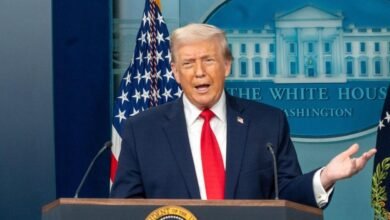
Supreme Court’s conservative justices pummel Trump admin on tariffs: ‘Can’t get this power back’


The U.S. Supreme Court is now staring down a big question: can President Trump use the International Emergency Economic Powers Act (IEEPA) to set tariffs on foreign products? On Wednesday, all nine justices – from both parties – asked tough questions about the Trump‑era tariff wave that has added an extra 10% duty on China and a baseline 10% on many other countries.
Why the IEEPA tariffs are controversial
Trump’s tariffs were rolled out under IEEPA, a 1977 law that gives the president a broad set of “emergency” powers. The act lets the president investigate, block, regulate, or even void trade with other countries when a national emergency is declared. It doesn’t speak directly about tariffs, but many point out that the language “regulate importation” can cover duties, quotas, and other trade restrictions.
No president since Nixon – who used the earlier Trading with the Enemy Act to impose an emergency 10% duty on all imports in 1971 – has used IEEPA to set tariffs. That makes the latest case uniquely significant.
The Supreme Court’s showdown
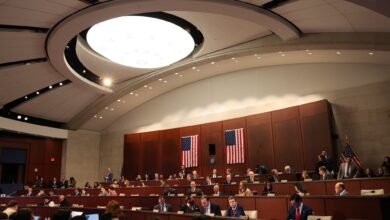
During oral arguments, the justices jostled between a desire for federal limits on executive power and a respect for the president’s role in defending national interests.
- Justice Neil Gorsuch warned that the law could become a “one‑way ratchet,” giving away more and more power to the president at Congress’s expense.
- Justice Sonia Sotomayor reminded the justices that Congress has long paired “regulate” with “tax” in its statutes, questioning whether the law truly limits the president.
- Chief Justice John Roberts pointed out that the power to impose tariffs has always been a core congressional authority. He referenced the “major questions” doctrine, which says that sweeping economic decisions require Congressional approval.
Arguments from both sides
Speaking for the administration, Solicitor General John Sauer said the IEEPA duties could bring in about $90 billion in a short period. Treasury Secretary Scott Bessent sat in the front row, hoping the Court would rule quickly. Bessent warned that a delayed decision could mean that $750 billion to $1 trillion in tariffs could already be collected by June 2026, making unwinding them a logistical nightmare.

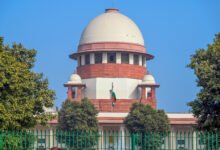
The challengers – represented by lawyers Neal Katyal and others – argue that the tariffs violate the Constitution and that President Trump overstepped his emergency powers. They also point to lower‑court rulings that say Trump lacks the authority to impose the “trafficking” and “reciprocal” tariffs he used.
Key points raised in the arguments
- License provisions: Justice Barrett probed whether IEEPA allows the president to set a fee that effectively acts as a tariff through a licensing scheme.
- Trade shut‑offs and tariffs: Justice Kavanaugh highlighted how the law enables a president to stop trade entirely but not to impose a small tariff, which he called an “odd doughnut hole” in the statute.
- High‑stakes trade policy: Justice Alito asked whether a president could use a tariff to stave off an imminent war if the enemy’s economy relied heavily on U.S. trade.
- Implementation logistics: Justice Barrett noted that refunding or adjusting tariffs would be “a complete mess” if the case ends the law’s application.
What’s next?
The justices said a decision should be made by the end of June. If the Court rules against Trump, the administration could look to other powers in the Trade Act of 1974, which lets the Trade Representative impose duties for a limited time if they believe foreign policies harm U.S. commerce.
Why this matters
The outcome will shape how the U.S. government can use emergency powers in trade disputes. It will also set a precedent for future presidents, affect hundreds of billions of dollars in tariff revenue, and determine the balance of power between the executive and legislative branches when addressing national security and trade issues.
Public reaction
Protesters gathered outside the Supreme Court both in support and opposition, wearing “Handmaid Tales” attire and holding signs in what seemed like a fervent display of democracy in action. Their presence underscores how the debate over Trump’s tariff strategy has reverberated across the country.
In short, this case is more than a legal argument; it’s a showdown over the limits of presidential power in U.S. trade policy, with thousands of dollars in tariffs, the future of U.S. import and export industries, and the health of the political system all on the line. The Supreme Court’s decision could reshape how the nation confronts international trade challenges for years to come.
Source: New York Post
Stay informed on all the latest news, real-time breaking news updates, and follow all the important headlines in world News on Latest NewsX. Follow us on social media Facebook, Twitter(X), Gettr and subscribe our Youtube Channel.