
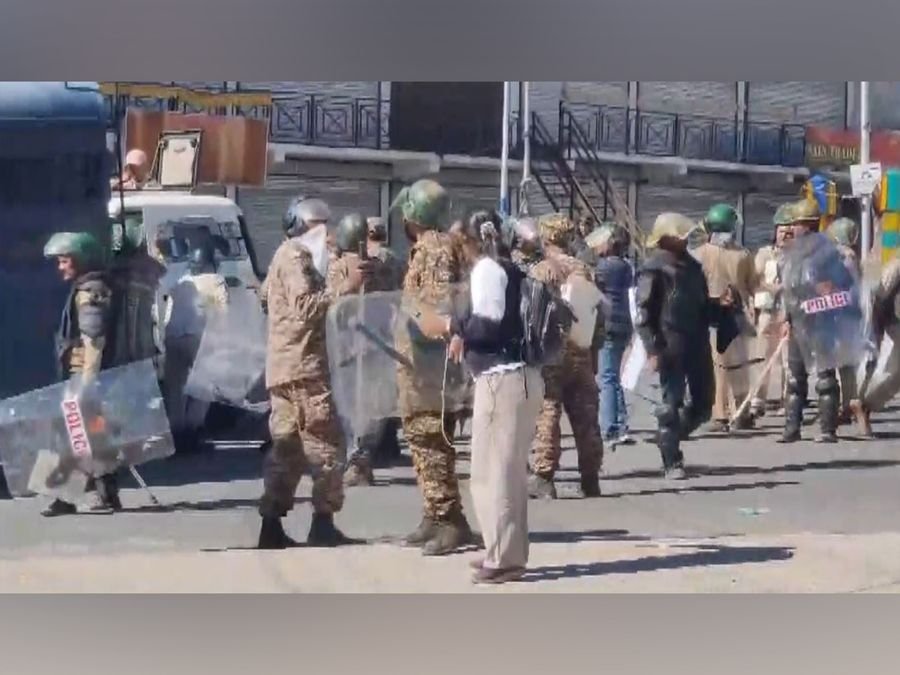
(source : ANI) ( Photo Credit : ani)
Government sources in India claim the recent violence during protests in Ladakh didn’t happen by accident—it was deliberately planned. They say local youth are suffering the most from what they call “narrow political games,” especially those pushed by activist Sonam Wangchuk.
The trouble started when a large demonstration in Leh, the main town in Ladakh, turned ugly. Protesters targeted government buildings and the local BJP office, sparking clashes that injured people and led to hospital visits.
Despite the chaos, the central government insists it’s ready to talk. Officials point out a key meeting with the High Powered Committee (HPC) is set for October 6 to tackle issues raised by groups like the Apex Body Leh (ABL) and Kargil Democratic Alliance (KDA). They’ve even agreed to add new members to the committee as suggested by ABL. When protesters asked to move things up, the government considered meetings as early as September 25 or 26. Earlier offers for talks on July 25 went unanswered, sources say.
But with dialogue on the table, why the violence? Sources accuse Wangchuk of stirring things up, noting his past hints at an “Arab Spring-style” uprising in Ladakh. They also reference his nods to youth-led protests in Nepal, calling it a possible playbook. Is he using the movement to cover personal problems or hide issues coming to light?
The finger-pointing extends to Congress leaders, with sources alleging they fueled the unrest for political and personal gain. Their comments about stone-pelting, shutdowns, and arson sounded too scripted, officials say. “The youth aren’t to blame—they got misled in this plot,” the sources added. The Centre promises to support Ladakh’s people and empower its young generation.
Ladakh’s Lieutenant Governor, Kavinder Gupta, echoed this, calling the protests a “conspiracy” because of efforts to rile up crowds and draw parallels to unrest in Bangladesh and Nepal.
At the heart of it all is Sonam Wangchuk, a key figure in the five-year push for Ladakh’s rights. He just ended his 15-day hunger strike after the clashes broke out. Speaking at a press conference, Wangchuk said he called it off to prevent more trouble and restore calm in the region. He slammed the violence, urging peace, and insisted no political party orchestrated it—none has that much pull with Leh’s youth anyway.
“This incident wrecked our peaceful protest that’s been going on for years,” Wangchuk said. “Youth are frustrated after five years of waiting, dealing with unemployment and bigger problems. We saw that Gen-Z energy today, but I condemn their violent methods.”
Earlier, he shared a video on X (formerly Twitter) begging young people to stop. “Very sad about events in Leh. My call for peace didn’t work today. Please stop this nonsense—it only hurts our cause,” he said. Wangchuk stressed that violence undermines the fight for Ladakh’s rights, especially after two people ended up in the hospital, igniting widespread anger.
The protests stem from long-standing demands to protect Ladakh’s tribal areas. People want the region added to the Sixth Schedule of the Indian Constitution, which offers special administration for tribal zones in states like Assam, Meghalaya, Tripura, and Mizoram. There’s also a push for statehood for both Ladakh and Jammu and Kashmir, ever since the government scrapped Article 370 in 2019.
As tensions cool, all eyes are on those upcoming talks to address Ladakh’s future and keep the peace.
Stay informed on all the latest news, real-time breaking news updates, and follow all the important headlines in world News on Latest NewsX. Follow us on social media Facebook, Twitter(X), Gettr and subscribe our Youtube Channel.