Fentanyl-fueled park turns LA’s oldest firehouse into drug overdose command post


What was once a modest, age‑worn fire station tucked against MacArthur Park has suddenly become a front‑line arena in an unchosen battlefield—serving as a rapid‑response hub in one of Los Angeles’ toughest fentanyl corridors.
LAFD Station 11 maintains a crew of 14 firefighters every day, often swelling to 16 when adding an ambulance and a fast‑response pickup truck topped with paramedics. The sheer volume of calls they juggle is almost beyond belief.
In the first eight months of 2025, the station answered a staggering 8,568 EMS missions while only encountering 55 structural fires, according to the Post’s review of LAFD records. Those figures place it among the nation’s busiest firehouses.
Firefighters routinely tackle “rubbish” flames—mostly sparked by the homeless—at a frantic pace, dousing one blaze before sprinting to the next, a station crew member told the Post.

MacArthur Park has morphed into a haven for Los Angeles’ most severe drug addicts, a chaotic corridor where overdoses occur every hour and criminal crews battle for control.
The park’s huge green space has turned into an expansive encampment, with crowds of people around and inside it on any given day.
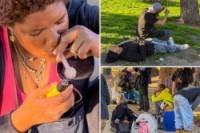
When the Post walked through the park on Friday and again on Monday, a number of young users—most in their 20s—were seen injecting with needles or smoking from makeshift glass pipes, some even shaped like shotguns. Others lay passed out or simply waiting for their next free meal.
We also observed straight‑barrel crack pipes being distributed in “safe smoking” kits provided by city and county programs.
Interestingly, not everyone who looks out at MacArthur Park during the day actually stays overnight. Several people told us they have rooms or apartments elsewhere but come daily because that’s where the handouts are.
Every time the Post visited, lines formed for food, medical vans, and “safe use” supplies—an organized line of help in a park visibly falling apart.
City officials claim that over $27 million has already been spent reviving MacArthur Park, funding overdose response teams, “peace ambassadors,” USC and LA Care street‑medicine groups, and dedicated clean‑up crews.
While the city boasts that these programs are working, Station 11’s logs paint a different picture. Overdoses continue to pile up.
The Post has reached out to councilwoman Eunissis Hernandez, who oversees the community and the park, multiple times over this investigation and has yet to receive any answer.
Los Angeles has set up a $22 million Opioid Settlement Trust Fund, with projections of an additional $4–5 million a year over the next twenty years.
A large portion of that money is going directly into MacArthur Westlake.
The council earmarked $3 million to build a Westlake Area Harm Reduction Services Drop‑In Center, a full‑scale facility that will provide naloxone, wound care, fentanyl and xylazine test strips, mental‑health assessments, referrals, and treatment services.
City budget documents show the Department on Disability expanding contracts for syringe exchange, overdose education, safer‑smoking kits (crack pipes), wound‑care supplies, and medication‑assisted treatment referrals— all of which are eligible for settlement reimbursement.
Health officials say the overall investment is paying off, but Station 11’s data suggest the on‑the‑ground reality remains far from aligned with the numbers.
After a multi‑victim shooting in January, Mayor Karen Bass ordered an LAPD surge in the area, increased foot patrols, targeted gang arrests, and temporary fencing on key blocks to shut down open‑air drug and goods markets.
By March, the LAPD reported a 34 % drop in violent crime around MacArthur Park and recovered over $350,000 as stolen retail merchandise through patrols that disrupted the park’s networks of illicit trade.
“We know there is still much work to be done in the MacArthur Park community, but over the past month, progress has been made in returning the park to the community. Crime in the area is down – theft and organized retail crime will not be tolerated in the City of Los Angeles,” Mayor Bass said.
Stay informed on all the latest news, real-time breaking news updates, and follow all the important headlines in world News on Latest NewsX. Follow us on social media Facebook, Twitter(X), Gettr and subscribe our Youtube Channel.