Dr. Mandaviya addresses the ‘Sports Governance Conclave’ in Ahmedabad

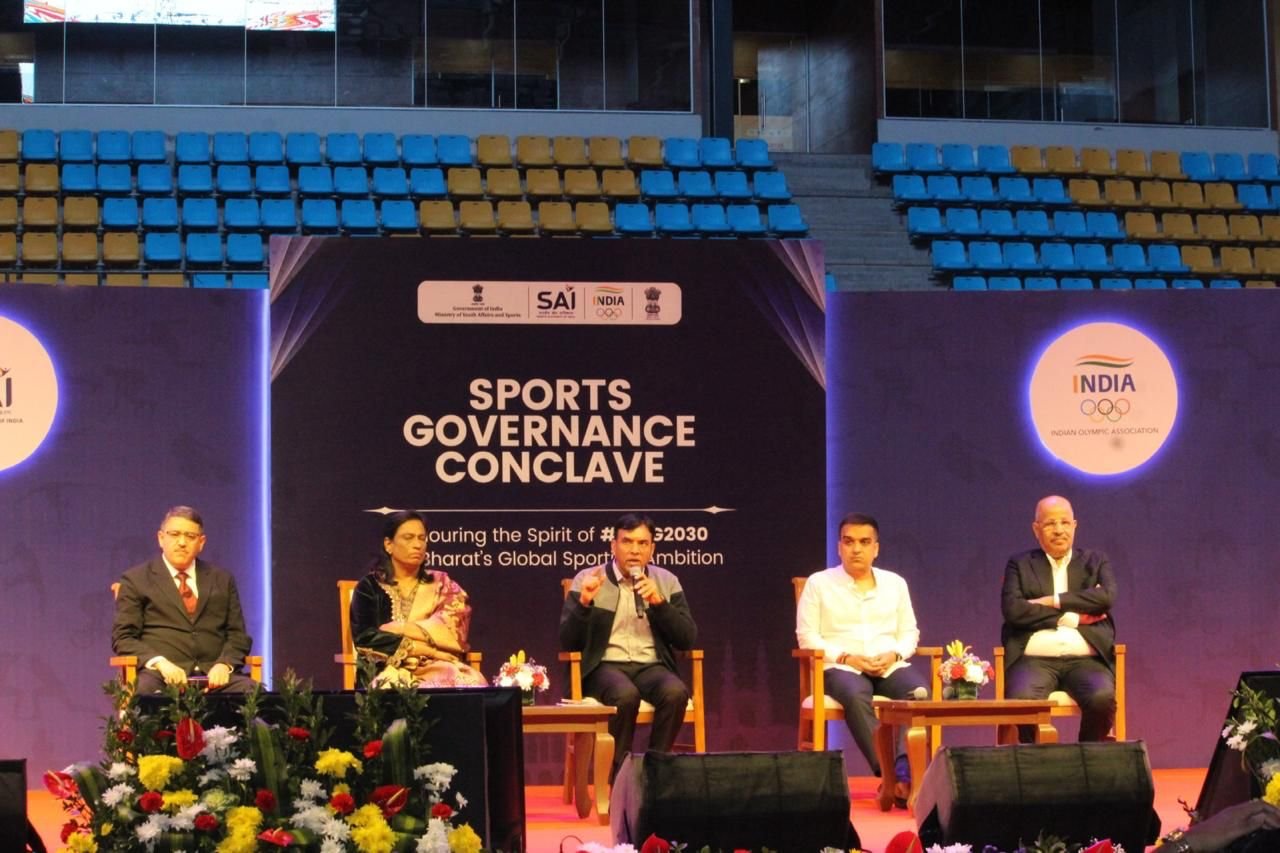
Ahmedabad, Jan 9 (LatestNewsX) Union Minister for Youth Affairs & Sports, Dr. Mansukh Mandaviya, on Friday stated that over the last one and a half years, the Central Government has laid a strong institutional foundation that clearly reflects its intent to reform Indian sports.
Dr Mandaviya was addressing the Sports Governance Conclave organised by the Government of India, in association with the Government of Gujarat and the Indian Olympic Association (IOA), at the Veer Savarkar Sports Complex in Ahmedabad. The conclave was attended by representatives of National Sports Federations (NSFs), State Olympic Associations, and members of the IOA Executive.
Addressing the gathering, the Minister outlined the Government’s clear and uncompromising priorities for India’s sports ecosystem, with a strong emphasis on governance reforms, competitive exposure, systematic talent identification and nurturing from grassroots to elite levels, strengthening the coaching ecosystem, and expanding private sector participation in sports infrastructure, academies, and leagues.
“Once a decision is taken, the Government has demonstrated both political will and clarity of purpose in its implementation,” he said, citing key initiatives such as the National Sports Governance Act (NSGA), Khelo Bharat Niti, reforms in ANSF norms, and improvements in coach recruitment systems.
Making the Government’s position unequivocally clear, the Minister asserted that persistent issues within sports federations, including internal politics, corruption, unfair selection trials, injustice to athletes, governance disputes, and financial irregularities, must now come to an end. “For us, the athlete and the nation’s reputation are paramount,” he said, adding that while the Government respects the autonomy of federations, the same commitment to integrity, transparency, and athlete-centric governance must be demonstrated by all sporting bodies.

He emphasised that the effective implementation of the NSGA would rest with the federations themselves and must ensure fair and timely elections, financial transparency, functional athlete commissions, ethics commissions, and strict compliance with prescribed governance norms.
Calling for a professional and future-oriented approach, the Minister urged every federation to prepare a clear roadmap for the next 1, 3, 5, and 10 years. He stressed that sports bodies must be professionally run, with qualified CEOs, financial experts, marketing professionals, international-level coaches, and specialised operations teams.
Dr. Mandaviya also announced that the Government would soon introduce key policy initiatives, including transparent and standardised selection trials, the “One Corporate, One Sport” model, and enhanced athlete welfare packages.
Highlighting the significant public investment already being made in sports science, nutrition, injury management, and high-performance support, he called upon federations to match the Government’s pace and ambition.
Reiterating India’s long-term sporting vision, the Minister declared that achieving a Top-10 finish in the Olympic medal tally is a non-negotiable national goal, underlining the critical role of National Sports Federations and State Olympic Associations in realising this ambition.
“Performance must show consistent improvement in every major international competition, beginning with the Asian Games 2026. The Commonwealth Games 2030 should emerge as a landmark success for India, both as hosts and as a sporting powerhouse,” he said.
Describing the present phase as the ‘golden period of Indian Sports’, Dr. Mandaviya concluded with a strong message of accountability: “History will remember what we achieve now, and it will not forgive what we fail to do.”
bsk/
Stay informed on all the latest news, real-time breaking news updates, and follow all the important headlines in world News on Latest NewsX. Follow us on social media Facebook, Twitter(X), Gettr and subscribe our Youtube Channel.