
Kosovo-US Ties Hit Rock Bottom: What’s Next for Pristina?
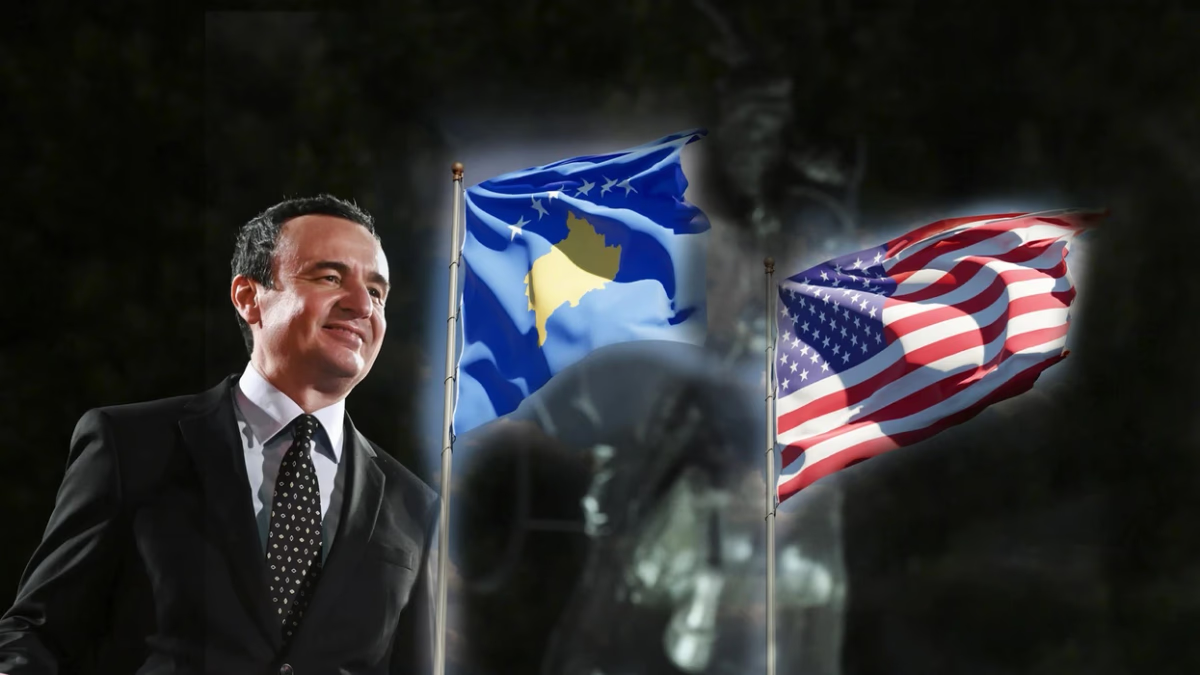
The recent suspension of the US-Kosovo dialogue has created the biggest rift between the two nations since Kosovo declared independence in 2008. Kosovo has always leaned heavily on US support—from NATO’s 1999 intervention to Washington’s key role in recognizing its sovereignty. American diplomacy has long protected Pristina from Serbia’s pushback and Russia’s blocks at the United Nations. With this support now cracking, Kosovo faces real dangers in its push for stability and growth.
Tensions with the US have been building for years, mainly because of Prime Minister Albin Kurti’s stubborn resistance to advice from Washington and the European Union (EU). These suggestions aimed to normalize ties with Serbia and boost Kosovo’s economy and society. Now, Kurti struggles on multiple fronts. Major opposition parties won’t team up with him to form a government, his popularity is fading fast, and both the US and EU—Kosovo’s vital allies—disapprove of his nationalist policies at home and abroad.
The US points to Kurti as a key reason for unrest in Serb-majority areas of Kosovo. They blame him for skipping government reforms, which has stalled the Kosovo-Serbia dialogue and blocked normalization efforts. Kurti turned down several US-brokered deals that could have advanced talks. Critics see him as too focused on Kosovo’s sovereignty, ignoring pressing issues like economic development, fighting top-level corruption, and drawing foreign investors to build a stronger Kosovo economy.
Kurti’s political missteps have made things worse. In 2020, he openly backed Joe Biden during the US presidential race, which angered Donald Trump. Then, in 2024, Kurti joined a panel at the Democratic National Convention in Chicago on "National Democratic Convention and the Role of Political Parties." This move clearly didn’t help relations with Trump and likely played a part in the US pausing the dialogue.
His ties with the EU aren’t any better. Frustrations boiled over in 2023 when the EU slapped sanctions on Kosovo and halted top-level meetings with Kurti. Moves like slapping 100% tariffs on Serbian goods and pushing unilateral control over Serb areas without talking to anyone clashed with EU goals. Kurti also refused to set up the Association of Serb Municipalities, a step the EU views as crucial for better Kosovo-Serbia relations. He often brushes off US and EU advice, pushing a "Kosovo first" line with fiery nationalist talk. As caretaker prime minister since the February elections, he’s also catching flak for ongoing political chaos.
Kurti’s biggest shortfall? He hasn’t shown the leadership Kosovo needs during tough times. Great statesmanship means looking ahead, adapting, and compromising to secure the future. Instead, Kurti fixates on conflicts with ethnic Serbs and resists working with key backers like the US and EU. Think of Plato’s "philosopher king" or Edmund Burke’s idea that real change preserves a nation’s strength—Kurti seems short on that vision.
Struggles to Build a New Government in Kosovo
Kurti’s Vetevendosje party grabbed the most seats in February’s elections, but he couldn’t pull together a coalition. Big opposition groups like the Democratic Party of Kosovo (PDK) and the Democratic League of Kosovo (LDK) said no to partnering with him. After eight months of infighting, he finally got his pick confirmed as parliament speaker—a must for forming a government. Still, he’s stuck, and his odds look slim.
The opposition could try teaming up—PDK, LDK, and smaller parties—but deep divides on domestic and foreign policies make that unlikely too. So, where does Kurti go from here? With no easy path to a coalition, calling fresh elections might be smart. It would test his true support. If his first term as prime minister won hearts and his agenda matches what Kosovars want, he has nothing to fear. But if voters turn him away, it shows his vision doesn’t fit the public’s hopes for a stable, prosperous Kosovo.
Charting Kosovo’s Path Forward
Whoever steps up as the next leader—Kurti or someone else—must act fast to calm tensions and win back trust from the US and EU. These powers guarantee Kosovo’s security and back its independence dreams, including EU membership. Ignoring their input won’t lead to a strong, self-reliant Kosovo.
A new prime minister should prioritize teamwork with the US and EU. Key steps include:
- Boost open talks: Share views regularly to rebuild trust and push Kosovo’s EU membership goals.
- Appoint a dialogue envoy: Lead serious Kosovo-Serbia talks, cut the anti-Serbian rhetoric, and aim for real agreements.
- Honor past deals: Stick to earlier dialogue wins, like creating the Association of Serb Municipalities.
- Build small bridges: Roll out quick wins in Serb-majority areas, such as fresh local elections, joint cultural events, better Serbian-language services, and regular meetups with Serb leaders.
- Drive reforms at home: Tackle corruption, spark economic growth, and bring opposition parties on board for broad public support.
Kosovo’s leaders, no matter their politics, need to team up with the US and EU while fixing things internally. The country doesn’t need more nationalist fire— it craves a bold, forward-thinking leader who delivers security, stability, and real progress for all Kosovars.
Stay informed on all the latest news, real-time breaking news updates, and follow all the important headlines in world News on Latest NewsX. Follow us on social media Facebook, Twitter(X), Gettr and subscribe our Youtube Channel.