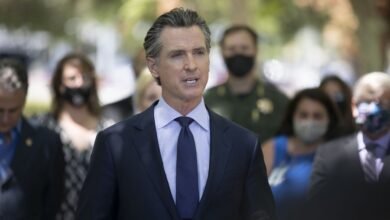
US is already fighting war with Venezuela’s traffickers — and it’s even deadlier than Vietnam, Sen. McCormick says


The United States is already waging a covert battle against Venezuela by targeting the country’s drug traffickers and narco‑terrorists. On Sunday, Senator Dave McCormick (R‑Pa.) warned that the casualties from Venezuelan drug operations outnumber the U.S. losses in the Vietnam War. He highlighted the fact that, in 2023, fentanyl, opioids, and cocaine claimed the lives of around 100,000 Americans—twice the number of Pennsylvania residents who died during the Vietnam conflict, according to McCormick on “Fox News Sunday.”
McCormick defended President Trump’s recent declaration that the Venezuelan airspace should be treated as closed: “We have a war that’s coming through fentanyl, through opioids, through cocaine. It killed 100,000 Americans last year. That’s twice the number of people that died in eight years of Vietnam — 4,000 Pennsylvanians.” He added that both he and Trump had campaigned on a promise to secure the borders, label cartels as narco‑terrorists, and use the military strategically to dismantle drug networks, a strategy McCormick said is now being applied to Venezuela.
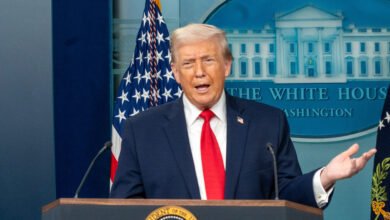
President Trump enounced a sweeping ban on all aerial activity over Venezuela at the end of Saturday: “All Airlines, Pilots, Drug Dealers, and Human Traffickers should please consider the airspace above and surrounding Venezuela to be closed in its entirety.” While the White House blames Venezuelan gangs for funneling opioids and cocaine into the United States, a 2019 DEA report shows that the majority of fentanyl— the primary culprit in American overdose deaths— originates in Mexico, with precursors shipped from China.
Venezuela is one of 23 countries that Trump has labeled a “major drug transit or major illicit drug‑producing country” in a September presidential determination, alongside China, India, Mexico, and the Dominican Republic. How the administration intends to enforce the no‑fly order remains unclear, though a FlightRadar24 snapshot on Sunday afternoon showed no international flights entering Venezuelan airspace. Planes to nearby Aruba and Curacao appeared to lodge longer routes to avoid the country, reflecting a common practice among warring nations that close another country’s airspace as a precursor to military action.
During the past months, Trump has amplified pressure on Venezuela by hitting suspected drug vessels, deploying U.S. naval forces in the Caribbean, and offering a $50 million bounty on President Nicolás Maduro. Under “Operation Southern Spear,” the U.S. has stationed the USS Gerald R. Ford Carrier Strike Group in the region, placing 11 ships, more than 70 aircraft, and nine carrier air wings in support of the anti‑drug campaign. The Secretary of the Navy has described the conflict with Venezuelan traffickers as a war, noting that “Drugs kill more Americans than we’ve ever lost in wars. So I think at the end of the day, the president has correctly identified this as an attack on the country, which it is,” John Phelan told “My View with Lara Trump.”
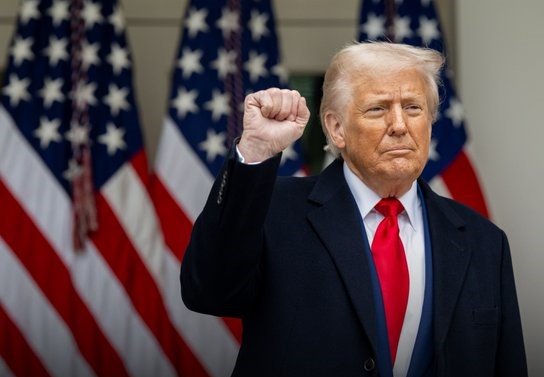


Trump hinted that Venezuelan soil might soon face targeted strikes. “You probably noticed that people aren’t wanting to be delivering by sea, and we’ll be starting to stop them by land also. The land is easier, but that’s going to start very soon,” he told service members in a Thanksgiving‑day call.
Maduro, whose tenure began in 2013 after Hugo Chávez’s death, has long been accused of election fraud, corruption, and human‑rights violations. Both the Biden and Trump administrations allege that Maduro stole the 2024 election, a charge that prompt the U.S. to designate him as the head of the Cartel de los Soles, a foreign terrorist organization. In sharp retaliation, Maduro’s government condemned Trump’s airspace ban as a “colonial threat” that undermines Venezuela’s territorial integrity, aviation security, and sovereignty. Trump had earlier in the month mentioned a potential meeting with Maduro in the United States, but the relationship remains strained.
Despite the military buildup in the Caribbean, Senator Markwayne Mullin (R‑Okla.) emphasized that Trump has not signaled intentions to deploy U.S. ground forces into Venezuela. “No, he’s made it very clear we’re not going to put troops into Venezuela. What we’re trying to do is protect our own shores,” Mullin said on CNN’s “State of the Union.” He also cautioned that U.S. citizens should not expect Venezuelan drug cartels to continue exploiting the country as a conduit for narcotics, which in turn endangers American lives.
Venezuela’s ongoing economic crisis—marked by record inflation and massive outmigration—continues to send waves of refugees into the United States, further complicating the geopolitical landscape in the New World Order.
Stay informed on all the latest news, real-time breaking news updates, and follow all the important headlines in world News on Latest NewsX. Follow us on social media Facebook, Twitter(X), Gettr and subscribe our Youtube Channel.