

India will step into the BRICS + presidency in 2026, a move that underscores its foundational role in the group and its drive to position the bloc as a major geopolitical force for the Global South. The nation’s leadership has already laid out a clear set of priorities for the coming year, according to a report released last Friday.
Following Brazil’s handover of the presidency from Russia in 2025, India will take the lead in 2026. The association now includes ten members: Brazil, China, Egypt, Ethiopia, India, Indonesia, Iran, Russia, South Africa, and the United Arab Emirates (UAE).
Kester Kenn Klomegah, an independent researcher specializing in African affairs in the Eurasian region, wrote in Modern Diplomacy that India’s upcoming term is poised to be “comprehensive and promising.” He added that the country has already shaped its agenda in a manner similar to its previous G20 presidency. “In close coordination with BRICS members and partner states, India must balance diverse interests and build mutual trust in a multipolar world,” Klomegah noted. “The goal is to transform BRICS into a full‑scale international organization that goes beyond present geopolitical challenges and establishes effective mechanisms for global development reflective of a multipolar order.”
BRICS convenes a leaders’ summit annually on a rotating basis. The host nation also organizes ministerial meetings—spanning foreign, finance, central bank, trade, and energy ministries—to advance the agenda during its presidency.
Prime Minister Narendra Modi first highlighted BRICS’ institutional reform ambitions at the 2014 summit, remarking that “reform of institutions of global governance … has been on the BRICS agenda since its inception.” He later clarified that the bloc is “non‑Western” and not anti‑Western, warning that it should not be perceived as a challenger to existing global institutions.


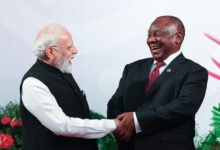
At the 2025 Rio de Janeiro summit, Modi announced that India would give BRICS a “new form” in 2026, proposing to rebrand the bloc as “Building Resilience and Innovation for Cooperation and Sustainability.” He emphasized a people‑centric approach and a focus on “humanity first,” urging the international community to tackle shared challenges such as pandemics and climate change. Modi also called for reforms to global institutions, demanding greater representation for the Global South and critiquing outdated structures like the United Nations Security Council and the World Trade Organization.
The New Development Bank—established by BRICS—finances projects across its member states. In addition to the core members, the bloc has expanded to include five new countries—Egypt, Iran, the UAE, Saudi Arabia, and Ethiopia—effective January 1, 2024. At the October 2024 summit in Kazan, Russia, BRICS created a category of partner countries, welcoming Belarus, Bolivia, Kazakhstan, Cuba, Malaysia, Thailand, Uganda, and Uzbekistan.
The enlarged BRICS+ account for about 36 % of global GDP, and the Economist Intelligence Unit projects that its combined economies will surpass the G7 by 2045. Today, BRICS represents more than a quarter of the world’s economy and nearly half of the global population.
Stay informed on all the latest news, real-time breaking news updates, and follow all the important headlines in world News on Latest NewsX. Follow us on social media Facebook, Twitter(X), Gettr and subscribe our Youtube Channel.