
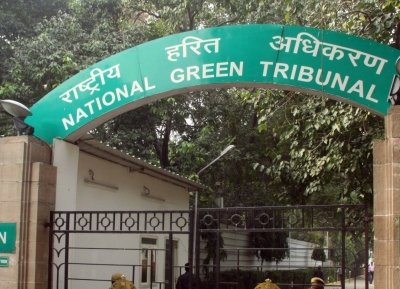
The National Green Tribunal (NGT) has stepped in to address the serious problem of textile waste in Bengaluru, India’s famous garment hub. The NGT took suo motu action, meaning it initiated the case on its own after a media report exposed the rising textile waste issue in the city.
A court bench led by Chairperson Justice Prakash Shrivastava reviewed the report titled “Bengaluru’s garment boom leaves a toxic trail.” The court, along with expert members, learned that Bengaluru produces nearly 5,000 tonnes of fabric waste every year.
A recent study by the Institute for Social and Economic Change (ISEC) found that big export factories handle their textile waste responsibly. But smaller workshops and tailoring shops often throw fabric scraps into household trash, worsening pollution and waste problems.
The NGT noted that only about 40% of Bengaluru’s textile waste is sent to recycling hubs in Tiruppur and Panipat. The remaining 60% is either dumped, burned, or turned into low-quality products like mattresses and dolls. These recycled items last only 8 to 10 years before they also end up in landfills or burn pits, harming the environment.
Cotton waste, which can be hazardous, is often mixed with regular garbage. This practice increases pollution and risks to the environment. Workers handling textile waste face unsafe conditions without proper safety gear or social protections.


The NGT pointed out that this situation may violate several environmental laws, including the Environment (Protection) Act, 1986, and other waste management rules from 2016. The tribunal also took action by involving key authorities such as the Karnataka State Pollution Control Board, Bengaluru’s municipal body BBMP, the Central Pollution Control Board (CPCB), and the Union Ministry of Environment, Forest and Climate Change.
The court has ordered that this case be transferred to its Southern Zonal Bench in Chennai for further review. It also directed officials to submit their responses within a week and clarified that authorities can appear virtually if needed.
The next hearing is scheduled for October 9 in Chennai. This case highlights the urgent need to improve textile waste management in Bengaluru and protect the environment from pollution caused by improper disposal of fabric scraps.